Marty Holland’s Fallen Angel is a 1945 hardboiled murder mystery. It has definite noir overtones but as is always the case whether or not a novel is true noir depends a great deal on the ending.
Marty Holland was a pseudonym used by Mary Hauenstein (1919-1971). This was her first novel. She enjoyed some modest success and had two of her stories filmed but her career soon seemed to run out of steam.
The protagonist of Fallen Angel, Eric Stanton, had been an insurance investigator but not an honest one, which was why he had to leave L.A. in a hurry. He’s headed for Frisco but his money has run out. He’s sitting in a diner in a nondescript small town named Walton. There’s where he notices the waitress, Stella. She’s really something. She gives him the brush-off but he’s persistent. She goes out with him. Things are going well between them but they need money.
Stella drags him along to a spook show where a very incompetent phoney medium is fleecing the punters. That’s when Eric gets his bright idea. A woman in the audience, by the name of Emmie, wants advice from her dead father on investing the very large inheritance he left her. Eric has figured a fool-proof angle which will allow him to get his hands on Emmie’s money. Then he and Stella will be set. They can get married.
The murder throws a spanner into the works. At first Eric is not a serious suspect. There are two other much more obvious suspects, but when it becomes clear that those other two guys could not have committed the murder the cops start to figure Eric as the prime suspect.
Eric’s instinct all through his life has been to cut and run whenever the going gets tough and that’s what he does now. He has now acquired a wife and she insists on running with him.
Eric knows the cops have a net spread for him and he’s getting increasingly panicky.
The worst thing is that he knows he is innocent but he can’t prove it. Of course if he could prove the guilt of the actual killer he’d be off the hook but he genuinely does not have the slightest idea of the killer’s identity, or why the murder took place.
Eric is a bit of a louse but he’s not really evil. He would never kill anyone. He’s just a chronic loser without the discipline to succeed in an honest line of business. He’s not short of self-pity. He lies because his instinct is always to lie. But he’s not beyond hope. Whether he can learn to accept responsibility and make a proper life for himself remains to be seen. And while he’s committed various criminal acts in the past he really is innocent of this murder. It’s just that he can’t see a way out.
For all his faults he’s a reasonably sympathetic protagonist.
This is a pretty decent murder mystery which looks like it might turn out to be full-blown noir, or it might not. It’s still quite entertaining and it’s recommended.
Stark House have issued Marty Holland’s second novel The Glass Heart and her novella The Sleeping City in a double-header paperback edition. The Glass Heart is flawed but interesting. The Sleeping City on the other hand is absolutely superb erotic noir.
Otto Preminger’s film adaptation Fallen Angel (1945) is top-notch film noir.
pulp novels, trash fiction, detective stories, adventure tales, spy fiction, etc from the 19th century up to the 1970s
Showing posts with label H. Show all posts
Wednesday, November 19, 2025
Sunday, May 25, 2025
J. Hunter Holly’s The Running Man
J. Hunter Holly’s The Running Man is a 1963 science fiction novel published as a paperback original by Monarch Books. It falls at least loosely into the category of science fiction paranoia fiction.
College professor Jeff Munro becomes involved, quite by accident, with a group known as Heralds for Peace (HFP). They’re a mysterious group regarded with suspicion by many. They appear to be a cult but whether they’re a religious or a political cult is uncertain. Jeff Munro violently disapproves of them.
Munro encounters an angry mob about to kill a woman. She is a member of HFP and the mob is convinced that HFP is some kind of sinister threat to society.
Then he encounters a strange very frightened man (Munro thinks of him as the Running Man) who is convinced that the HFP are out to kill him. And It appears that they really are out to kill him.
Munro is puzzled. He has seen evidence of irrational hatred directed at HFP but also evidence that they might indeed be a sinister organisation. He is intrigued enough to start poking about the cult’s vast headquarters compound hidden away deep in the woods. He sees a couple of things that lead him to wonder if this really is an ordinary cult or whether there might be strange and powerful forces at work, forces that might be unnatural or other-worldly in origin. He expects cult members to be fanatics, but these cultists are disturbingly zombie-like.
Infiltrating the HFP seems like a good idea at the time but Munro may have landed himself in the middle of something more dangerous than he can handle.
And also more perplexing. There may be bad guys behind the cult, or possibly several different groups involved behind the scenes. All of them may be planning to double-cross each other. There may be multiple levels of double-crosses. The nature of the bad guys is a mystery - there does seem to be something unnatural going on.
Munro needs to find somebody he can trust but he might be better off not trusting anybody.
In 1963 brainwashing was becoming a cultural obsession. Not just brainwashing of prisoners-of-war but more subtle forms of brainwashing employed by the advertising industry and governments - there were plenty of different kinds of brainwashing about which to be paranoid and this novel certainly taps into that cultural obsession.
Munro is an interesting hero. He’s a college professor so he’s not exactly open-minded. He led a campaign to deprive the HFP of the right to speak on campus. He has a bit of an authoritarian steak although at the time the author may have seen that as a good thing. It certainly makes Munro a valuable potential recruit for the HFP - this is a man who has a yearning for power.
There’s plenty of paranoia here. Poor Munro seems to be hopelessly out of his depth. He starts to understand some of what is going on, but not all of it, and that could lead him into making mistakes. And he’s just an ordinary college professor, not a secret agent.
There is some genuine science fiction content although it takes a while to emerge. The science fiction elements are moderately interesting.
It’s a fairly entertaining tale if you enjoy science fiction paranoia and you don’t set your expectations too high. Worth a look.
Armchair Fiction have paired this novel with William P. McGivern’s The Mad Robot in a two-novel paperback edition.
College professor Jeff Munro becomes involved, quite by accident, with a group known as Heralds for Peace (HFP). They’re a mysterious group regarded with suspicion by many. They appear to be a cult but whether they’re a religious or a political cult is uncertain. Jeff Munro violently disapproves of them.
Munro encounters an angry mob about to kill a woman. She is a member of HFP and the mob is convinced that HFP is some kind of sinister threat to society.
Then he encounters a strange very frightened man (Munro thinks of him as the Running Man) who is convinced that the HFP are out to kill him. And It appears that they really are out to kill him.
Munro is puzzled. He has seen evidence of irrational hatred directed at HFP but also evidence that they might indeed be a sinister organisation. He is intrigued enough to start poking about the cult’s vast headquarters compound hidden away deep in the woods. He sees a couple of things that lead him to wonder if this really is an ordinary cult or whether there might be strange and powerful forces at work, forces that might be unnatural or other-worldly in origin. He expects cult members to be fanatics, but these cultists are disturbingly zombie-like.
Infiltrating the HFP seems like a good idea at the time but Munro may have landed himself in the middle of something more dangerous than he can handle.
And also more perplexing. There may be bad guys behind the cult, or possibly several different groups involved behind the scenes. All of them may be planning to double-cross each other. There may be multiple levels of double-crosses. The nature of the bad guys is a mystery - there does seem to be something unnatural going on.
Munro needs to find somebody he can trust but he might be better off not trusting anybody.
In 1963 brainwashing was becoming a cultural obsession. Not just brainwashing of prisoners-of-war but more subtle forms of brainwashing employed by the advertising industry and governments - there were plenty of different kinds of brainwashing about which to be paranoid and this novel certainly taps into that cultural obsession.
Munro is an interesting hero. He’s a college professor so he’s not exactly open-minded. He led a campaign to deprive the HFP of the right to speak on campus. He has a bit of an authoritarian steak although at the time the author may have seen that as a good thing. It certainly makes Munro a valuable potential recruit for the HFP - this is a man who has a yearning for power.
There’s plenty of paranoia here. Poor Munro seems to be hopelessly out of his depth. He starts to understand some of what is going on, but not all of it, and that could lead him into making mistakes. And he’s just an ordinary college professor, not a secret agent.
There is some genuine science fiction content although it takes a while to emerge. The science fiction elements are moderately interesting.
It’s a fairly entertaining tale if you enjoy science fiction paranoia and you don’t set your expectations too high. Worth a look.
Armchair Fiction have paired this novel with William P. McGivern’s The Mad Robot in a two-novel paperback edition.
Saturday, January 11, 2025
Donald Hamilton's Night Walker
Night Walker is an early (1954) spy thriller by Donald Hamilton. At this time he was a moderately successful writer of paperback originals in the crime, spy thriller and western genres. Then in 1960 (with the excellent Death of a Citizen) he created Matt Helm, the toughest most ruthless of all fictional spies, and from that point on he concentrated on writing Matt Helm thrillers.
Night Walker has some of the grittiness of the Helm novels, and it has an intriguingly not-totally-heroic hero.
David Young is a youthful Navy lieutenant on his way to report back to active duty. We will soon find out that he has very mixed feelings about this.
He hitches a ride and gets knocked on the head with a wrench. He wakes up in a hospital bed with his head entirely covered in bandages and discovers that everybody thinks he is Larry Wilson. Larry Wilson was the guy who hit him with a wrench.
In hospital he is visited by his wife Elizabeth, or rather Larry Wilson’s wife Elizabeth. For some reason she is anxious to believe that he is her husband. Or to have him believe that she believes he is her husband.
He also meets Wilson’s cute young girlfriend Bunny. For some reason David feels he should go along with the deception although he’s not sure why he agrees to do this. He can’t explain to himself why he doesn’t just reveal his true identity to the doctors.
This is one of the interesting things about the novel. David has some personal demons to wrestle with and he doesn’t always understand his own motivations. Or rather, he isn’t always honest with himself about his own motivations.
He and Elizabeth settle into a bizarre and uneasy married life. They sleep together. David doesn’t think he’s in love with her.
Elizabeth knows that this is not her husband. She offers David a detailed explanation of what happened to both David and her husband and why these things happened, and of her own part in it. David doesn’t believe a word of it, but he continues to go along with the charade.
There are definitely some hints of noir fiction already becoming apparent. A flawed hero allowing himself to be manipulated by a woman even though he knows he shouldn’t trust her. An atmosphere of deception and paranoia. Elizabeth will certainly strike the reader as a potential femme fatale. And there are hints of slightly odd sexual obsessions.
And then there’s Bunny. Everybody treats Bunny as if she’s a young girl but she’s a young woman. Her relationship with Larry Wilson is a bit mysterious. They were obviously lovers, but there’s something not quite right about the picture.
Another complication is that Elizabeth has a lover, a middle-aged doctor.
There’s a spy fiction plot developing as well. That list of boats that David found is the sort of list a spy might make. It could be a list of rendezvous points. And before bludgeoning him with the wrench Larry Wilson had admitted to being under suspicion as a communist spy.
You can see some of the early plot twists coming but I think that’s intentional on Hamilton’s part. He wants us to think that we’re starting to figure things out. Then he hits us with a series of plot twists. And then some more plot twists.
Things are getting out of control for David. He’s a fairly sympathetic hero. He does some dumb things. His judgment isn’t great when it comes to women. He is haunted by the past. Overall he’s not such a bad guy and we’re inclined to give him some slack. He’s a very imperfect hero but he’s believable enough. His mistakes make sense in view of what we know about his past. He’s a protagonist who could go either way - he could spiral down to destruction into a noirish nightmare world or he could pull himself out of the hole he’s in. We can’t predict which way things will go.
This is a grown-up spy thriller, with people who do foolish or wrong things for entirely understandable reasons. They’re real people.
Night Walker is a fine spy thriller. Highly recommended.
Night Walker has some of the grittiness of the Helm novels, and it has an intriguingly not-totally-heroic hero.
David Young is a youthful Navy lieutenant on his way to report back to active duty. We will soon find out that he has very mixed feelings about this.
He hitches a ride and gets knocked on the head with a wrench. He wakes up in a hospital bed with his head entirely covered in bandages and discovers that everybody thinks he is Larry Wilson. Larry Wilson was the guy who hit him with a wrench.
In hospital he is visited by his wife Elizabeth, or rather Larry Wilson’s wife Elizabeth. For some reason she is anxious to believe that he is her husband. Or to have him believe that she believes he is her husband.
He also meets Wilson’s cute young girlfriend Bunny. For some reason David feels he should go along with the deception although he’s not sure why he agrees to do this. He can’t explain to himself why he doesn’t just reveal his true identity to the doctors.
This is one of the interesting things about the novel. David has some personal demons to wrestle with and he doesn’t always understand his own motivations. Or rather, he isn’t always honest with himself about his own motivations.
He and Elizabeth settle into a bizarre and uneasy married life. They sleep together. David doesn’t think he’s in love with her.
Elizabeth knows that this is not her husband. She offers David a detailed explanation of what happened to both David and her husband and why these things happened, and of her own part in it. David doesn’t believe a word of it, but he continues to go along with the charade.
There are definitely some hints of noir fiction already becoming apparent. A flawed hero allowing himself to be manipulated by a woman even though he knows he shouldn’t trust her. An atmosphere of deception and paranoia. Elizabeth will certainly strike the reader as a potential femme fatale. And there are hints of slightly odd sexual obsessions.
And then there’s Bunny. Everybody treats Bunny as if she’s a young girl but she’s a young woman. Her relationship with Larry Wilson is a bit mysterious. They were obviously lovers, but there’s something not quite right about the picture.
Another complication is that Elizabeth has a lover, a middle-aged doctor.
There’s a spy fiction plot developing as well. That list of boats that David found is the sort of list a spy might make. It could be a list of rendezvous points. And before bludgeoning him with the wrench Larry Wilson had admitted to being under suspicion as a communist spy.
You can see some of the early plot twists coming but I think that’s intentional on Hamilton’s part. He wants us to think that we’re starting to figure things out. Then he hits us with a series of plot twists. And then some more plot twists.
Things are getting out of control for David. He’s a fairly sympathetic hero. He does some dumb things. His judgment isn’t great when it comes to women. He is haunted by the past. Overall he’s not such a bad guy and we’re inclined to give him some slack. He’s a very imperfect hero but he’s believable enough. His mistakes make sense in view of what we know about his past. He’s a protagonist who could go either way - he could spiral down to destruction into a noirish nightmare world or he could pull himself out of the hole he’s in. We can’t predict which way things will go.
This is a grown-up spy thriller, with people who do foolish or wrong things for entirely understandable reasons. They’re real people.
Night Walker is a fine spy thriller. Highly recommended.
Night Walker is available in paperback from Hard Case Crime.
Wednesday, January 8, 2025
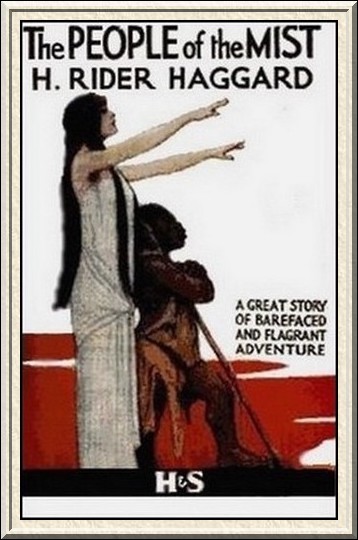
H. Rider Haggard’s The People of the Mist
H. Rider Haggard’s novel The People of the Mist was published in 1894 by which time he was just about the most popular writer in Britain. Haggard largely invented the Lost Civilisation genre and The People of the Mist definitely falls into this category.
Brothers Tom and Leonard Outtram were born into wealth. As sons of a wealthy baronet they had social position, education and all the advantages that any young men could enjoy. Until their father’s shady business dealings bring it all crashing down. The father kills himself, leaving his sons penniless and faced with the loss of the ancestral estate. The brothers make a vow that they will leave England to seek fortune elsewhere. When they have made their fortunes they will return to England to repurchase the estate and restore the family honour.
They end up in Africa, digging unsuccessfully for gold. Tom dies of fever but makes a death-bed prophecy - that Leonard will gain untold riches with the help of a woman.
Then an elderly African woman named Soa turns up with a strange tale. She had been nurse to a young English-Portuguese girl. She and the girl were devoted to each other. Now the girl, Juanna, has been captured by slavers. She wants Leonard’s help in rescuing the girl. And then she really gets Leonard’s attention - if he rescues Juanna then Soa will tell him how to reach the land of the fabled People of the Mist where rubies and sapphires are as common as pebbles. Surely this must be part of Tom’s dying prophecy - Soa is the woman who will lead Leonard to riches.
With his faithful African sidekick Otter (he really is more a sidekick than a servant) Leonard finds himself hurled into a series of extraordinary adventures. They will find the People of the Mist, Juanna and Otter will be worshipped as gods and they will face countless dangers from sacred crocodiles and treacherous priests, they will be imprisoned, they will have narrow escapes from death and will have to face the terror of the ice bridge.
Haggard understood that action and danger are essential ingredients of an adventure tale but it helps to have interesting characters. All of the characters in this story, African and European, are interesting and they’re all varied. There’s not one character who can be dismissed as a stereotype (either a racial stereotype or an adventure fiction stereotype).
Leonard is certainly a brave and determined hero capable of acting nobly but he is not a Boys’ Own Paper perfect specimen of manly heroism. He is not motivated by the desire to perform noble deeds, or even by a thirst for adventure. He is motivated by plain old-fashioned greed. He is a flawed hero.
Juanna is not quite a perfect heroine. She is quick-tempered, jumps to conclusions and misinterprets her own feelings and the feelings of others. She’s a fine young woman, but she has her exasperating quirks.
Otter is a dwarf and extremely ugly. He drinks far too much. He doesn’t know when to keep his mouth shut. He’s also as brave as a lion, almost as strong and in a fight he knows how to use brains as well as brawn.
Soa is very complicated. At times she seems like a villainess, at other times like a wise guide. She does some very bad things but she always has comprehensible motivations. She was dealt a bad hand by fate and her resentments are understandable. There is good and bad in her.
Nam the high priest is a villain, but again he has comprehensible motivations. He’s not just villainous for the sake of being villainous.
The land of the People of the Mist is far from being a utopia. They have some unpleasant customs but their reasons for clinging to their traditions are understandable.
Brothers Tom and Leonard Outtram were born into wealth. As sons of a wealthy baronet they had social position, education and all the advantages that any young men could enjoy. Until their father’s shady business dealings bring it all crashing down. The father kills himself, leaving his sons penniless and faced with the loss of the ancestral estate. The brothers make a vow that they will leave England to seek fortune elsewhere. When they have made their fortunes they will return to England to repurchase the estate and restore the family honour.
They end up in Africa, digging unsuccessfully for gold. Tom dies of fever but makes a death-bed prophecy - that Leonard will gain untold riches with the help of a woman.
Then an elderly African woman named Soa turns up with a strange tale. She had been nurse to a young English-Portuguese girl. She and the girl were devoted to each other. Now the girl, Juanna, has been captured by slavers. She wants Leonard’s help in rescuing the girl. And then she really gets Leonard’s attention - if he rescues Juanna then Soa will tell him how to reach the land of the fabled People of the Mist where rubies and sapphires are as common as pebbles. Surely this must be part of Tom’s dying prophecy - Soa is the woman who will lead Leonard to riches.
With his faithful African sidekick Otter (he really is more a sidekick than a servant) Leonard finds himself hurled into a series of extraordinary adventures. They will find the People of the Mist, Juanna and Otter will be worshipped as gods and they will face countless dangers from sacred crocodiles and treacherous priests, they will be imprisoned, they will have narrow escapes from death and will have to face the terror of the ice bridge.
Haggard understood that action and danger are essential ingredients of an adventure tale but it helps to have interesting characters. All of the characters in this story, African and European, are interesting and they’re all varied. There’s not one character who can be dismissed as a stereotype (either a racial stereotype or an adventure fiction stereotype).
Leonard is certainly a brave and determined hero capable of acting nobly but he is not a Boys’ Own Paper perfect specimen of manly heroism. He is not motivated by the desire to perform noble deeds, or even by a thirst for adventure. He is motivated by plain old-fashioned greed. He is a flawed hero.
Juanna is not quite a perfect heroine. She is quick-tempered, jumps to conclusions and misinterprets her own feelings and the feelings of others. She’s a fine young woman, but she has her exasperating quirks.
Otter is a dwarf and extremely ugly. He drinks far too much. He doesn’t know when to keep his mouth shut. He’s also as brave as a lion, almost as strong and in a fight he knows how to use brains as well as brawn.
Soa is very complicated. At times she seems like a villainess, at other times like a wise guide. She does some very bad things but she always has comprehensible motivations. She was dealt a bad hand by fate and her resentments are understandable. There is good and bad in her.
Nam the high priest is a villain, but again he has comprehensible motivations. He’s not just villainous for the sake of being villainous.
The land of the People of the Mist is far from being a utopia. They have some unpleasant customs but their reasons for clinging to their traditions are understandable.
The characters reflect the social and cultural attitudes of the time but it’s important to understand that the actual Victorians were nothing like the caricatured view so many people have of them today. They were intelligent complicated people with all of the normal human contradictions. Their beliefs and values were complex and nuanced.
It’s worth remembering that a lot of the clichés of adventure fiction were invented by Haggard and they weren’t clichés then.
This is a longish book but there’s plenty of plot, plenty of action and peril and an interesting cast of characters. There’s a reason that Haggard’s books remain in print after a century and a half. They remain in print because they’re extremely good. This one is not quite as good as his acknowledged masterpiece She but it’s highly recommended.
I’ve also reviewed Haggard’s King Solomon’s Mines.
It’s worth remembering that a lot of the clichés of adventure fiction were invented by Haggard and they weren’t clichés then.
This is a longish book but there’s plenty of plot, plenty of action and peril and an interesting cast of characters. There’s a reason that Haggard’s books remain in print after a century and a half. They remain in print because they’re extremely good. This one is not quite as good as his acknowledged masterpiece She but it’s highly recommended.
I’ve also reviewed Haggard’s King Solomon’s Mines.
Saturday, December 14, 2024
Donald Hamilton's Mad River
Mad River, published in 1956, is one of the handful of westerns written by Donald Hamilton. Hamilton of course is best known for his spy fiction. He wrote crime fiction as well.
I’ve read several of Hamilton’s Matt Helm spy novels and I consider them to be among the best spy thrillers of their era, or any era for that matter. But I had not read any of his westerns. To be brutally honest I have read almost nothing at all in the western genre even though I’ve developed a great fondness for western movies.
Boyd Cohoon has returned home to the small town of Sombrero in Arizona, after spending five years in the Territorial Prison in Yuma for a stage coach hold-up. There is considerable doubt about the events of the day on which the stage was held up. Boyd confessed, but not everyone believed that his confession was sincere. It was in fact a complicated mess. Boyd is twenty-four years old. When he went to prison he was, by his own admission, a young fool. He has no intention of ending up back in prison, or of ending his life on the end of the rope.
His problem is that there is a matter of revenge to be dealt with. A year earlier his father and brother were murdered. The identity of the murderer seems fairly clear, but Boyd is not going to act hastily. When a man survives five years behind bars he learns not to be a fool, or at least Boyd Cohoon has learnt not to be a fool. He’s not going to risk his life going after a man who just might possibly be innocent.
On his way back to Sombrero after his release he met a girl named Nan. A girl who was obviously less than entirely respectable. She will be starting work as a singer at Miss Bessie’s. Miss Bessie’s is a popular entertainment venue in Sombrero. It is a brothel. Just how non-respectable Nan is is uncertain. Boyd doesn’t care. She seems rather pleasant.
Boyd has a thoroughly respectable girl waiting for him in Sombrero. They’re going to be married. Claire is the daughter of Colonel Paradine. At least Boyd assumed they were going to be married. In fact Claire is about to marry Paul Westerman, the man who might have murdered Boyd’s father and brother.
So at this stage we have what is perhaps as much a noir fiction setup as a setup for a western. Revenge is a standard western theme but this story involves all kinds of betrayals and breakdowns of communication and misunderstandings and suspicions. Most of the characters have questionable pasts. Many are now involved in other shady dealings. The two women are as morally ambiguous as the men. They might even turn out to belong to some extent to the femme fatale category. They could certainly, whether deliberately or accidentally, lead Boyd Cohoon to his doom.
Boyd Cohoon is an interesting hero. Initially he comes across as passive. In fact he’s not at all lacking in courage or fighting about. He’s just careful. He is not interested in revenge at the price of self-destruction. He’s also a guy who, if he decides to fight, likes to choose the time and place.
We end up getting plenty of action and excitement, handled with considerable skill.
There’s a romantic triangle which is particularly effective because it’s not a straightforward choice between the Good Girl and the Bad Girl. The women in this novel are more complicated than that. They do at times get to do brave things but they are not action heroines. They seem like actual women, with convincingly female emotions.
Coming from Donald Hamilton you expect this book to be well written and you expect the plotting to be very competent. Both of these expectations are met. A fine read which has left me wanting to read more westerns and more Donald Hamilton. Highly recommended.
I’ve reviewed quite a few of Hamilton’s truly excellent Matt Helm spy thrillers - Death of a Citizen, Murderers’ Row, The Silencers and The Wrecking Crew.
I’ve read several of Hamilton’s Matt Helm spy novels and I consider them to be among the best spy thrillers of their era, or any era for that matter. But I had not read any of his westerns. To be brutally honest I have read almost nothing at all in the western genre even though I’ve developed a great fondness for western movies.
Boyd Cohoon has returned home to the small town of Sombrero in Arizona, after spending five years in the Territorial Prison in Yuma for a stage coach hold-up. There is considerable doubt about the events of the day on which the stage was held up. Boyd confessed, but not everyone believed that his confession was sincere. It was in fact a complicated mess. Boyd is twenty-four years old. When he went to prison he was, by his own admission, a young fool. He has no intention of ending up back in prison, or of ending his life on the end of the rope.
His problem is that there is a matter of revenge to be dealt with. A year earlier his father and brother were murdered. The identity of the murderer seems fairly clear, but Boyd is not going to act hastily. When a man survives five years behind bars he learns not to be a fool, or at least Boyd Cohoon has learnt not to be a fool. He’s not going to risk his life going after a man who just might possibly be innocent.
On his way back to Sombrero after his release he met a girl named Nan. A girl who was obviously less than entirely respectable. She will be starting work as a singer at Miss Bessie’s. Miss Bessie’s is a popular entertainment venue in Sombrero. It is a brothel. Just how non-respectable Nan is is uncertain. Boyd doesn’t care. She seems rather pleasant.
Boyd has a thoroughly respectable girl waiting for him in Sombrero. They’re going to be married. Claire is the daughter of Colonel Paradine. At least Boyd assumed they were going to be married. In fact Claire is about to marry Paul Westerman, the man who might have murdered Boyd’s father and brother.
So at this stage we have what is perhaps as much a noir fiction setup as a setup for a western. Revenge is a standard western theme but this story involves all kinds of betrayals and breakdowns of communication and misunderstandings and suspicions. Most of the characters have questionable pasts. Many are now involved in other shady dealings. The two women are as morally ambiguous as the men. They might even turn out to belong to some extent to the femme fatale category. They could certainly, whether deliberately or accidentally, lead Boyd Cohoon to his doom.
Boyd Cohoon is an interesting hero. Initially he comes across as passive. In fact he’s not at all lacking in courage or fighting about. He’s just careful. He is not interested in revenge at the price of self-destruction. He’s also a guy who, if he decides to fight, likes to choose the time and place.
We end up getting plenty of action and excitement, handled with considerable skill.
There’s a romantic triangle which is particularly effective because it’s not a straightforward choice between the Good Girl and the Bad Girl. The women in this novel are more complicated than that. They do at times get to do brave things but they are not action heroines. They seem like actual women, with convincingly female emotions.
Coming from Donald Hamilton you expect this book to be well written and you expect the plotting to be very competent. Both of these expectations are met. A fine read which has left me wanting to read more westerns and more Donald Hamilton. Highly recommended.
I’ve reviewed quite a few of Hamilton’s truly excellent Matt Helm spy thrillers - Death of a Citizen, Murderers’ Row, The Silencers and The Wrecking Crew.
Wednesday, December 11, 2024
Marty Holland’s The Glass Heart/The Sleeping City
Marty Holland’s novel The Glass Heart was published in 1946. Her novella The Sleeping City was written in 1952. They’ve been issued in a single volume by Stark House.
Marty Holland was a pseudonym used by Mary Hauenstein (1919-1971) and in The Glass Heart she serves up a some noirness and a whole lot of craziness.
Curt Blair is your typical noir drifter, getting by as a petty thief. Taking refuge from the cops he talks himself into a handyman job with the middle-aged Mrs Block. He intends to stay a day or so. Then he figures out that the old girl must be loaded. She boasts that her house in Hollywood is worth fifty-five thousand dollars (an immense amount of money in 1946) plus she owns a ranch and a beach house. Curt figures that if he sticks around he might be able to get his hands on some of that money.
Mrs Block is however both shrewd and tightfisted. Curt loses interest, until he meets Mrs Block’s new lodger. Lynn is very cute. Curt figures he’ll stick around a bit longer.
Things get more complicated when Lynn, who is being cheated by Mrs Block, finds another young woman to share the rent with her. Elise is blonde and very pretty but a bit odd. She talks to her fiancée a lot, which is a bit strange since he’s been dead for two years. Elise is a wild-eyed preacher lady and she’s about to take up her duties in her new church. Curt if put off by her at first, but those cute blonde curls and that shapely body attract his interest more and more.
Curt is a sucker for cute dames and now he’s stringing two of them along, and Mrs Block as well.
And then he makes his discovery in the cellar.
Curt now knows he has away of getting his hands on some of that money but he’s getting drawn into dangerously crazy situations. One crazy female can be a problem, but two of them adds up to real trouble.
Curt is amoral and he’s a bit of a sleazebag but he’s getting badly out of his depth.
The plot twists are pretty wild.
I’m not sure I’d describe this as full-blown noir but it’s certainly noirish and it’s fairly enjoyable.
It’s worth bearing in mind that the author was very young when she wrote this novel. The Sleeping City appeared six years later and it’s a much more assured and more tightly-constructed story.
This is a heist story. Wade is an undercover cop who has infiltrated a gang who are planning something big. The cops don’t know what the job is - finding that out is Wade’s assignment. It turns out to be very big and very ambitious indeed. The heist is being planned by an ageing mobster named Louie Thompson.
The heist story is solid but the main interest is provided by Madge. She’s Thompson’s girlfriend. As you might expect from a woman author we get a female character here with some complexity. On one level Madge is your typical gangster’s moll, a hardboiled ex-whore. But she cries a lot. She thinks Thompson is a swell guy. He’d like to marry her. She thinks that would be pretty good. She wouldn’t mind having kids. There’s just one thing. She can’t stand having sex with him. Actually there’s a second problem. She despises him. Madge wants to get out of the life she’s leading, and yet she doesn’t. She’s a complicated girl. She’s tough and hardbitten and she’s a frightened lonely little girl.
Wade has a sweetheart, named Betty. Betty is a great girl. They’re saving up to get married but they’re already sleeping together. This is a story that takes a grown-up view of sex, and of female sexual desire. They’re sleeping together because Betty needs Wade in her bed right now.
Of course Wade and Madge get involved. Wade can’t stop himself. Maybe it’s those too-tight dresses she wears, or the fact that it’s very obvious that she’s a girl who doesn’t bother with bras. Or panties either for that matter. And she has a luscious body. The attraction is mutual. Wade is a big strong healthy male. Madge approves of that. This is going to complicate things. He’s a cop. He has a job to do. But he can’t stop thinking about how great Madge is in bed. And that frightened lonely little girl thing she has going does something to him. Suddenly he’s forgotten all about Betty.
It’s the Wade-Madge relationship that provides the real noirness here. Madge is not a stock-standard femme fatale but Wade is definitely a noir protagonist.
One thing I have to say about Marty Holland - her endings are odd but interesting and slightly unexpected. The Glass Heart is intriguing if slightly flawed. The Sleeping City is top-notch erotic noir. This volume is a highly recommended purchase.
Marty Holland was a pseudonym used by Mary Hauenstein (1919-1971) and in The Glass Heart she serves up a some noirness and a whole lot of craziness.
Curt Blair is your typical noir drifter, getting by as a petty thief. Taking refuge from the cops he talks himself into a handyman job with the middle-aged Mrs Block. He intends to stay a day or so. Then he figures out that the old girl must be loaded. She boasts that her house in Hollywood is worth fifty-five thousand dollars (an immense amount of money in 1946) plus she owns a ranch and a beach house. Curt figures that if he sticks around he might be able to get his hands on some of that money.
Mrs Block is however both shrewd and tightfisted. Curt loses interest, until he meets Mrs Block’s new lodger. Lynn is very cute. Curt figures he’ll stick around a bit longer.
Things get more complicated when Lynn, who is being cheated by Mrs Block, finds another young woman to share the rent with her. Elise is blonde and very pretty but a bit odd. She talks to her fiancée a lot, which is a bit strange since he’s been dead for two years. Elise is a wild-eyed preacher lady and she’s about to take up her duties in her new church. Curt if put off by her at first, but those cute blonde curls and that shapely body attract his interest more and more.
Curt is a sucker for cute dames and now he’s stringing two of them along, and Mrs Block as well.
And then he makes his discovery in the cellar.
Curt now knows he has away of getting his hands on some of that money but he’s getting drawn into dangerously crazy situations. One crazy female can be a problem, but two of them adds up to real trouble.
Curt is amoral and he’s a bit of a sleazebag but he’s getting badly out of his depth.
The plot twists are pretty wild.
I’m not sure I’d describe this as full-blown noir but it’s certainly noirish and it’s fairly enjoyable.
It’s worth bearing in mind that the author was very young when she wrote this novel. The Sleeping City appeared six years later and it’s a much more assured and more tightly-constructed story.
This is a heist story. Wade is an undercover cop who has infiltrated a gang who are planning something big. The cops don’t know what the job is - finding that out is Wade’s assignment. It turns out to be very big and very ambitious indeed. The heist is being planned by an ageing mobster named Louie Thompson.
The heist story is solid but the main interest is provided by Madge. She’s Thompson’s girlfriend. As you might expect from a woman author we get a female character here with some complexity. On one level Madge is your typical gangster’s moll, a hardboiled ex-whore. But she cries a lot. She thinks Thompson is a swell guy. He’d like to marry her. She thinks that would be pretty good. She wouldn’t mind having kids. There’s just one thing. She can’t stand having sex with him. Actually there’s a second problem. She despises him. Madge wants to get out of the life she’s leading, and yet she doesn’t. She’s a complicated girl. She’s tough and hardbitten and she’s a frightened lonely little girl.
Wade has a sweetheart, named Betty. Betty is a great girl. They’re saving up to get married but they’re already sleeping together. This is a story that takes a grown-up view of sex, and of female sexual desire. They’re sleeping together because Betty needs Wade in her bed right now.
Of course Wade and Madge get involved. Wade can’t stop himself. Maybe it’s those too-tight dresses she wears, or the fact that it’s very obvious that she’s a girl who doesn’t bother with bras. Or panties either for that matter. And she has a luscious body. The attraction is mutual. Wade is a big strong healthy male. Madge approves of that. This is going to complicate things. He’s a cop. He has a job to do. But he can’t stop thinking about how great Madge is in bed. And that frightened lonely little girl thing she has going does something to him. Suddenly he’s forgotten all about Betty.
It’s the Wade-Madge relationship that provides the real noirness here. Madge is not a stock-standard femme fatale but Wade is definitely a noir protagonist.
One thing I have to say about Marty Holland - her endings are odd but interesting and slightly unexpected. The Glass Heart is intriguing if slightly flawed. The Sleeping City is top-notch erotic noir. This volume is a highly recommended purchase.
Saturday, October 19, 2024
Willard E. Hawkins' Scratch One Asteroid
Scratch One Asteroid is a science fiction novella by Willard E. Hawkins that was first published in Amazing Stories in November 1952.
Willard E. Hawkins (1887-1970) wrote a smallish quantity of short form science fiction from the 1920s to the 1950s. Scratch One Asteroid seems to have been one of his last published stories.
The background to the story is that Mars and Venus have been colonised. Both planets had their own native inhabitants (in 1952 this still seemed vaguely plausible) but there is no interstellar space flight.
Brent Agar and Pete Monson are convicts on their way to the prison planetoid Ceres. Brent is determined to escape. When he finds out that there is, very unusually, a woman aboard the prison spaceship he thinks his chance has come. Her name is Vesta Clement, she’s a passenger and she’s being dropped off at a private resort planetoid. Brent and Pete hijack Vesta and the space tender and they’re very pleased to have gained their freedom but that freedom turns out to be an illusion.
The private planetoid belongs to Vesta’s fabulously rich uncle Wade Ballentine. He lives there alone apart from a surprisingly large staff of Venusians. Brent and Pete are his prisoners while Vesta is his guest.
Brent is suspicious of the whole setup. Wade Ballentine’s story doesn’t add up. Brent thinks that he and Pete and in danger and that Vesta is in even more danger. Brent is a convict but he’s basically a pretty decent guy. He really doesn’t want any harm to befall Vesta. He feels rather protective towards her.
What Brent needs to do is to figure out what Ballentine is up to. Brent has a hunch that whatever it is it’s highly illegal and that Ballentine isn’t going to want any witnesses left alive.
This is space adventure rather than anything approaching hard science fiction but the author is at least aware that a tiny planetoid would have very little gravity indeed. He comes up with some simple technobabble to deal with this and with the problem of providing an atmosphere for what is little more than a smallish asteroid. He doesn’t try to make the technobabble convincing because it’s not necessary. This is an adventure tale and he wants to get on with it.
There’s neither the time not the necessity for any real characterisation. Pete is good-natured and a bit thick-headed. Brent is resourceful, determined and fundamentally a nice enough guy. Vesta is just your basic rich girl although she’s pleasant and rather pretty.
The idea of asteroids being turned into luxury private estates or exclusive resort hotels in space is a reasonably good one. It is implied that one of the attractions of such private planetoids is that they’re outside normal legal jurisdictions.
Hawkins’ prose is basic but serviceable.
Armchair Fiction have paired this title with The Secret Kingdom by Otis Adelbert Kline and Allen S. Kline in a two-novel paperback edition.
Some of the obscure pulp stories Armchair Fiction have unearthed turn out to be neglected gems. Even the weaker ones, such as this, are interesting in giving us a glimpse of the range of fiction published by the pulps. We can appreciate the gems more fully when we can compare them to the run-of-the-mill stories. This is a lightweight pulp story but it’s harmless and at least moderately entertaining. Worth a look but don’t set your expectations too high.
Willard E. Hawkins (1887-1970) wrote a smallish quantity of short form science fiction from the 1920s to the 1950s. Scratch One Asteroid seems to have been one of his last published stories.
The background to the story is that Mars and Venus have been colonised. Both planets had their own native inhabitants (in 1952 this still seemed vaguely plausible) but there is no interstellar space flight.
Brent Agar and Pete Monson are convicts on their way to the prison planetoid Ceres. Brent is determined to escape. When he finds out that there is, very unusually, a woman aboard the prison spaceship he thinks his chance has come. Her name is Vesta Clement, she’s a passenger and she’s being dropped off at a private resort planetoid. Brent and Pete hijack Vesta and the space tender and they’re very pleased to have gained their freedom but that freedom turns out to be an illusion.
The private planetoid belongs to Vesta’s fabulously rich uncle Wade Ballentine. He lives there alone apart from a surprisingly large staff of Venusians. Brent and Pete are his prisoners while Vesta is his guest.
Brent is suspicious of the whole setup. Wade Ballentine’s story doesn’t add up. Brent thinks that he and Pete and in danger and that Vesta is in even more danger. Brent is a convict but he’s basically a pretty decent guy. He really doesn’t want any harm to befall Vesta. He feels rather protective towards her.
What Brent needs to do is to figure out what Ballentine is up to. Brent has a hunch that whatever it is it’s highly illegal and that Ballentine isn’t going to want any witnesses left alive.
This is space adventure rather than anything approaching hard science fiction but the author is at least aware that a tiny planetoid would have very little gravity indeed. He comes up with some simple technobabble to deal with this and with the problem of providing an atmosphere for what is little more than a smallish asteroid. He doesn’t try to make the technobabble convincing because it’s not necessary. This is an adventure tale and he wants to get on with it.
There’s neither the time not the necessity for any real characterisation. Pete is good-natured and a bit thick-headed. Brent is resourceful, determined and fundamentally a nice enough guy. Vesta is just your basic rich girl although she’s pleasant and rather pretty.
The idea of asteroids being turned into luxury private estates or exclusive resort hotels in space is a reasonably good one. It is implied that one of the attractions of such private planetoids is that they’re outside normal legal jurisdictions.
Hawkins’ prose is basic but serviceable.
Armchair Fiction have paired this title with The Secret Kingdom by Otis Adelbert Kline and Allen S. Kline in a two-novel paperback edition.
Some of the obscure pulp stories Armchair Fiction have unearthed turn out to be neglected gems. Even the weaker ones, such as this, are interesting in giving us a glimpse of the range of fiction published by the pulps. We can appreciate the gems more fully when we can compare them to the run-of-the-mill stories. This is a lightweight pulp story but it’s harmless and at least moderately entertaining. Worth a look but don’t set your expectations too high.
Friday, June 21, 2024
Orrie Hitt’s Trailer Tramp
Orrie Hitt’s Trailer Tramp, published by Beacon Books in 1957, falls into the trailer camp sleaze sub-genre. Trailer tramps had mushroomed across the United States in the 50s and gained a reputation as dens of iniquity. These were artificial non-permanent communities. The goings-on confirmed all the worst fears of small town America about the depravity that must invariably flourish when people don’t live in tight-knit communities in which their neighbours act of moral policemen to keep them on the straight and narrow.
Joan runs a successful trailer camp. She isn’t married. She was thinking of marrying Luke, until she discovered that Luke wanted to sleep with her. She was of course deeply shocked. Joan is a decent girl and decent girls don’t do such things. And she caught him with Nora, and Nora clearly isn’t a decent girl at all. Nora lets men do things to her. Shocking things. Nora is the type who allows men to Go All The Way, which no decent woman would ever do.
Joan does however need a man to help her run the trailer park, so (perhaps unwisely) she hires Luke. Also, perhaps unwisely, she allows Nora to rent a trailer to use for her massage business. It sounded harmless enough. With the members of a construction crew currently staying in the trailer camp Nora will get plenty of customers. The idea that a massage business could be anything but respectable has never occurred to Joan. Joan has led a very sheltered life.
The head of the construction crew is Big Mike, and she finds herself attracted to him although naturally her attraction to him is entirely innocent. She’s a decent girl. Then she discovers that after a few drinks even decent girls can become shameless tramps. She is paralysed with guilt and shame, but all is not lost. Mike will marry her. He said he would. She is sure he is really a decent guy and when a decent guy sleeps with a girl he marries her. That’s how life works.
There are all kinds of potential complications. There’s Sally, an old flame of Mike’s, but that’s nothing to worry about. She knows that Mike isn’t interested in Sally any more. He told Joan this, and she knows she can trust him.
As you may have gathered Joan is as dumb as a rock. As a character she presents a slight credibility problem. It’s impossible to believe that anyone as naïve as Joan could run a trailer camp successfully. She is entirely oblivious to the possibility that anything immoral could possibly happen there.
Orrie Hitt was at his best when his books combined mild sleaze elements with very definite noir fiction elements. Hitt was very strong when it came to creating a noir atmosphere of overheated passions and betrayals.
There is some noirness here, as seemingly harmless incidents start to point to more sinister possibilities and Joan finds herself increasingly trapped. There’s no way out for her without a scandal. And in 1957 scandal was a fate worse than death.
Joan is torn between Luke and Mike and she is tortured by the knowledge that, as awful as it may seem, she feels physical desire for both men. She is sure that she can trust one of them but not the other. One of them is lying to her, the other is telling her the truth. Her problem is that she can’t figure out which of them is the one she can trust. And Hitt manages to keep the reader unsure on this point as well.
The sleaze factor here is so mild as to be almost non-existent, but in 1957 the very fact that unmarried people are having sex, even if the sex happens offscreen as it were, was enough to make a book titillating. And there are hints of prostitution, always good for a moral scare in the 50s (in fact rather depressingly it’s still good for a moral scare today).
This is not a crime novel, but eventually there is a crime, and a serious one.
This is not one of Hitt’s better books. It’s still fairly enjoyable and recommended to Hitt fans, and to full-blown trailer camp sleaze aficionados.
The Cheaters, the genuinely sleazy Wayward Girl, the very noirish The Widow and She Got What She Wanted are all better places to start if you’re new to Orrie Hitt’s work.
Trailer Tramp is included in Stark House Cult Classics’s three-novel Trailer Tramps paperback, along with Doug Duperrault’s Trailer Camp Woman and Tom Harland’s Love Camp on Wheels.
Joan runs a successful trailer camp. She isn’t married. She was thinking of marrying Luke, until she discovered that Luke wanted to sleep with her. She was of course deeply shocked. Joan is a decent girl and decent girls don’t do such things. And she caught him with Nora, and Nora clearly isn’t a decent girl at all. Nora lets men do things to her. Shocking things. Nora is the type who allows men to Go All The Way, which no decent woman would ever do.
Joan does however need a man to help her run the trailer park, so (perhaps unwisely) she hires Luke. Also, perhaps unwisely, she allows Nora to rent a trailer to use for her massage business. It sounded harmless enough. With the members of a construction crew currently staying in the trailer camp Nora will get plenty of customers. The idea that a massage business could be anything but respectable has never occurred to Joan. Joan has led a very sheltered life.
The head of the construction crew is Big Mike, and she finds herself attracted to him although naturally her attraction to him is entirely innocent. She’s a decent girl. Then she discovers that after a few drinks even decent girls can become shameless tramps. She is paralysed with guilt and shame, but all is not lost. Mike will marry her. He said he would. She is sure he is really a decent guy and when a decent guy sleeps with a girl he marries her. That’s how life works.
There are all kinds of potential complications. There’s Sally, an old flame of Mike’s, but that’s nothing to worry about. She knows that Mike isn’t interested in Sally any more. He told Joan this, and she knows she can trust him.
As you may have gathered Joan is as dumb as a rock. As a character she presents a slight credibility problem. It’s impossible to believe that anyone as naïve as Joan could run a trailer camp successfully. She is entirely oblivious to the possibility that anything immoral could possibly happen there.
Orrie Hitt was at his best when his books combined mild sleaze elements with very definite noir fiction elements. Hitt was very strong when it came to creating a noir atmosphere of overheated passions and betrayals.
There is some noirness here, as seemingly harmless incidents start to point to more sinister possibilities and Joan finds herself increasingly trapped. There’s no way out for her without a scandal. And in 1957 scandal was a fate worse than death.
Joan is torn between Luke and Mike and she is tortured by the knowledge that, as awful as it may seem, she feels physical desire for both men. She is sure that she can trust one of them but not the other. One of them is lying to her, the other is telling her the truth. Her problem is that she can’t figure out which of them is the one she can trust. And Hitt manages to keep the reader unsure on this point as well.
The sleaze factor here is so mild as to be almost non-existent, but in 1957 the very fact that unmarried people are having sex, even if the sex happens offscreen as it were, was enough to make a book titillating. And there are hints of prostitution, always good for a moral scare in the 50s (in fact rather depressingly it’s still good for a moral scare today).
This is not a crime novel, but eventually there is a crime, and a serious one.
This is not one of Hitt’s better books. It’s still fairly enjoyable and recommended to Hitt fans, and to full-blown trailer camp sleaze aficionados.
The Cheaters, the genuinely sleazy Wayward Girl, the very noirish The Widow and She Got What She Wanted are all better places to start if you’re new to Orrie Hitt’s work.
Trailer Tramp is included in Stark House Cult Classics’s three-novel Trailer Tramps paperback, along with Doug Duperrault’s Trailer Camp Woman and Tom Harland’s Love Camp on Wheels.
Tuesday, April 23, 2024
Dell Holland's The Far Out Ones
The Far Out Ones by Dell Holland is included in Stark House’s three-novel paperback edition A Beatnik Trio. It was published in 1963.
The authorship of late 50 and early 60s sleaze novels can be challenging to untangle. Donald Westlake and Lawrence Block, prior to finding fame as crime writers, made a very good living churning out sleaze fiction using pseudonyms such as Andrew Shaw. They figured it would be cool if they could get other writers to ghost-write some of these novels. Which is how William R. Coons came into the picture. He wrote sleaze novels as Andrew Shaw and as Dell Holland. The Far Out Ones is one of the books he wrote as Dell Holland.
It has to be said that The Far Out Ones doesn’t have a huge amount to do with beatniks. The only beatnik is Jim, and he never considered himself a fully-fledged beatnik.
Jim is hitchhiking and gets picked up by two gorgeous young women, Sue and Joan. Sue and Joan are headed for New York. The three need a place to stay for night and end up at Zach’s Inn. The inn is hard to miss, what with the nude girl on the roof and all. Not a picture or a statue but a real nude girl. Her name is Emmy. She’s fixing the roof for her pa. Emmy isn’t keen on wearing clothes.
Her pa is Sam. He has a distant cousin by the name of Charlie working for him as handyman. Charlie belongs to the local tribe but they’re a bit embarrassed by him. Every time he ventures into the woods he gets lost. Charlie has no more idea how to survive in the woods than any greenhorn city boy.
Jim is keen to get Joan into bed. Sam and Charlie are equally keen to bed Sue. They all get their way. Sue is a very broadminded girl and she’s happy to have two men alternating as her bed partners. Joan is a bit more prim and proper but Jim’s charm wins her over and she’s soon shedding her clothes for him.
It’s all rather cosy, until disaster strikes. But it’s not a real disaster, since Sam ends up with quite a bit of money. Sam likes making his friends happy so they all head for new York. They end up in Greenwich Village. Emmy comes along as well - she has dreams of making it as a dancer.
Joan is the only one with any keenness for work. Emmy does however get a job as a belly dancer. Jim has decided to become a famous playwright. It sounds like a good way to make a living, as long as he doesn’t actually have to write plays. He thinks he’s found a way to make his plan work.
Along the way there’s lots of sex for everybody.
Despite the fact that some later scenes take place in the Village and despite Jim’s semi-beatnik status it’s a stretch to call this a beatnik novel. It’s basically just a sleaze novel.
A sleaze novel with major comic overtones. In fact at times it approaches farce. And it is genuinely amusing and pleasingly crazy and frenetic.
It’s also reasonably sexy, with the sex being described moderately graphic (by 1963 standards). One nice thing is that everybody enjoys the sex. The women enjoy it every bit as much as the men. This is a cheerfully amoral good-natured feel-good story. Nobody gets punished for having sex. Nobody gets punished for choosing freedom rather than the daily grind of a 9 to 5 job. It’s OK to have a good time. In that respect, in its rejection of the conventional social norms of its day, I guess it could be considered a sort of counterculture or beatnik novel.
This isn’t a work with any literary aspirations but it’s a lot of fun. Highly recommended.
The authorship of late 50 and early 60s sleaze novels can be challenging to untangle. Donald Westlake and Lawrence Block, prior to finding fame as crime writers, made a very good living churning out sleaze fiction using pseudonyms such as Andrew Shaw. They figured it would be cool if they could get other writers to ghost-write some of these novels. Which is how William R. Coons came into the picture. He wrote sleaze novels as Andrew Shaw and as Dell Holland. The Far Out Ones is one of the books he wrote as Dell Holland.
It has to be said that The Far Out Ones doesn’t have a huge amount to do with beatniks. The only beatnik is Jim, and he never considered himself a fully-fledged beatnik.
Jim is hitchhiking and gets picked up by two gorgeous young women, Sue and Joan. Sue and Joan are headed for New York. The three need a place to stay for night and end up at Zach’s Inn. The inn is hard to miss, what with the nude girl on the roof and all. Not a picture or a statue but a real nude girl. Her name is Emmy. She’s fixing the roof for her pa. Emmy isn’t keen on wearing clothes.
Her pa is Sam. He has a distant cousin by the name of Charlie working for him as handyman. Charlie belongs to the local tribe but they’re a bit embarrassed by him. Every time he ventures into the woods he gets lost. Charlie has no more idea how to survive in the woods than any greenhorn city boy.
Jim is keen to get Joan into bed. Sam and Charlie are equally keen to bed Sue. They all get their way. Sue is a very broadminded girl and she’s happy to have two men alternating as her bed partners. Joan is a bit more prim and proper but Jim’s charm wins her over and she’s soon shedding her clothes for him.
It’s all rather cosy, until disaster strikes. But it’s not a real disaster, since Sam ends up with quite a bit of money. Sam likes making his friends happy so they all head for new York. They end up in Greenwich Village. Emmy comes along as well - she has dreams of making it as a dancer.
Joan is the only one with any keenness for work. Emmy does however get a job as a belly dancer. Jim has decided to become a famous playwright. It sounds like a good way to make a living, as long as he doesn’t actually have to write plays. He thinks he’s found a way to make his plan work.
Along the way there’s lots of sex for everybody.
Despite the fact that some later scenes take place in the Village and despite Jim’s semi-beatnik status it’s a stretch to call this a beatnik novel. It’s basically just a sleaze novel.
A sleaze novel with major comic overtones. In fact at times it approaches farce. And it is genuinely amusing and pleasingly crazy and frenetic.
It’s also reasonably sexy, with the sex being described moderately graphic (by 1963 standards). One nice thing is that everybody enjoys the sex. The women enjoy it every bit as much as the men. This is a cheerfully amoral good-natured feel-good story. Nobody gets punished for having sex. Nobody gets punished for choosing freedom rather than the daily grind of a 9 to 5 job. It’s OK to have a good time. In that respect, in its rejection of the conventional social norms of its day, I guess it could be considered a sort of counterculture or beatnik novel.
This isn’t a work with any literary aspirations but it’s a lot of fun. Highly recommended.
Wednesday, March 13, 2024
Jim Harmon’s The Man Who Made Maniacs!
Armchair Fiction have re-issued a lot of obscure but extremely interesting science fiction and other mid-20th century genre novels. Their two-novel paperback editions are usually very much worth buying. In these editions you might get one excellent novel and one that’s not so good but it’s surprising how often both novels turn out to be highly entertaining. Science fiction and horror are their specialities but occasionally they come up with something so weird as to be almost unclassifiable.
That’s definitely the case with their double-header that includes Thorp McClusky’s Loot of the Vampire and Jim Harmon’s The Man Who Made Maniacs! I see Loot of the Vampire as fitting vaguely into the short-lived 1930s weird detective story genre. The Man Who Made Maniacs! was published in 1961 and I have no idea to what genre it belongs. All I know is that it’s deeply weird. It’s The Man Who Made Maniacs! that concerns us in this review.
Jace Reid is a Hollywood screenwriter. A couple of years earlier he had a big success with a book and a movie called Maniac. It was about murderous sex fiends. Naturally a lot of people assumed that a man who wrote about such subjects was most likely a sex fiend himself. One guy saw the movie and then committed a murder, claiming to be inspired by the movie. That was pretty upsetting to Jace.
Now something even worse has happened. Someone has accused him of running a sadistic satanic Hollywood sex cult. And the cops seem to be taking the accusation seriously. The cops come knocking on his door just as he’s about to engage in some serious bedroom fun with his agent Lisa, which is more than a little annoying.
Jace has worked in Hollywood so he, like everybody else, knows that most people in Hollywood really are involved in bizarre sex orgies. But mostly they’re harmless bizarre sex orgies. And Jace is not personally involved in any such goings-on.
Soon things become a lot more disturbing for Jace. He finds himself in a sanatorium where the staff are crazier than the patients. He is drugged, or at least he thinks he was drugged. There’s a girl named Doris MacNiter who accuses him of encouraging her sister Clara’s sadomasochistic tendencies. He has never met Clara. Now he gets to meet both sisters and they’re both rather worrying.
Then the dead body shows up.
The books gets much stranger. There’s a dead guy who may or may not really be dead. There’s a vampire, or at least there might be. There’s lots of sexual kinkiness. People are not who they seem to be, but then maybe they are. Disturbing things happen to Jace, or at least they might have happened. There are beatniks.
This is actually a book that would fit in well with the late 60s vogue for psychedelic freak-out movies and books, but you don’t expect that so much in 1961.
This might be a crime story of sorts. It might have been intended as horror. It may have been aimed at the sleaze fiction market. In fact I’d be fairly certain that was the primary target market but the author seems to have had other agendas going.
There are some amusing moments but it’s not quite certain that this is intended as a spoof, but it might be a spoof.
All of the women have very large breasts. That point is strongly emphasised. Not just large breasts but large thrusting breasts. There are lots of catfights. Those large thrusting breasts always seem to play a key role in the catfights.
It’s hard to say whether the book is well-written or badly written. A decision on that point depends on just how seriously you think the author was taking his story, and whether you think it’s all done with tongue firmly planted in cheek.
Either way it’s a wild crazy oddball book and for me that’s enough to earn it a highly recommended rating, as long as you realise that I’m recommending it for its very high weirdness quotient.
That’s definitely the case with their double-header that includes Thorp McClusky’s Loot of the Vampire and Jim Harmon’s The Man Who Made Maniacs! I see Loot of the Vampire as fitting vaguely into the short-lived 1930s weird detective story genre. The Man Who Made Maniacs! was published in 1961 and I have no idea to what genre it belongs. All I know is that it’s deeply weird. It’s The Man Who Made Maniacs! that concerns us in this review.
Jace Reid is a Hollywood screenwriter. A couple of years earlier he had a big success with a book and a movie called Maniac. It was about murderous sex fiends. Naturally a lot of people assumed that a man who wrote about such subjects was most likely a sex fiend himself. One guy saw the movie and then committed a murder, claiming to be inspired by the movie. That was pretty upsetting to Jace.
Now something even worse has happened. Someone has accused him of running a sadistic satanic Hollywood sex cult. And the cops seem to be taking the accusation seriously. The cops come knocking on his door just as he’s about to engage in some serious bedroom fun with his agent Lisa, which is more than a little annoying.
Jace has worked in Hollywood so he, like everybody else, knows that most people in Hollywood really are involved in bizarre sex orgies. But mostly they’re harmless bizarre sex orgies. And Jace is not personally involved in any such goings-on.
Soon things become a lot more disturbing for Jace. He finds himself in a sanatorium where the staff are crazier than the patients. He is drugged, or at least he thinks he was drugged. There’s a girl named Doris MacNiter who accuses him of encouraging her sister Clara’s sadomasochistic tendencies. He has never met Clara. Now he gets to meet both sisters and they’re both rather worrying.
Then the dead body shows up.
The books gets much stranger. There’s a dead guy who may or may not really be dead. There’s a vampire, or at least there might be. There’s lots of sexual kinkiness. People are not who they seem to be, but then maybe they are. Disturbing things happen to Jace, or at least they might have happened. There are beatniks.
This is actually a book that would fit in well with the late 60s vogue for psychedelic freak-out movies and books, but you don’t expect that so much in 1961.
This might be a crime story of sorts. It might have been intended as horror. It may have been aimed at the sleaze fiction market. In fact I’d be fairly certain that was the primary target market but the author seems to have had other agendas going.
There are some amusing moments but it’s not quite certain that this is intended as a spoof, but it might be a spoof.
All of the women have very large breasts. That point is strongly emphasised. Not just large breasts but large thrusting breasts. There are lots of catfights. Those large thrusting breasts always seem to play a key role in the catfights.
It’s hard to say whether the book is well-written or badly written. A decision on that point depends on just how seriously you think the author was taking his story, and whether you think it’s all done with tongue firmly planted in cheek.
Either way it’s a wild crazy oddball book and for me that’s enough to earn it a highly recommended rating, as long as you realise that I’m recommending it for its very high weirdness quotient.
Monday, February 19, 2024
Thea von Harbou's Spies (Spione)
Spies (the original German title is Spione) is a 1929 spy novel by Thea von Harbou.
Thea von Harbou was married to Fritz Lang from 1922 to 1933 and wrote the screenplays for most of his great German movies. Some of her screenplays were based on her own novels while in other cases she wrote both the screenplay and the novel more or less simultaneously. While she is recognised as a very important screenwriter her novels are less well known in the English-speaking world.
Which is a great pity. Her novel Metropolis (written in tandem with her screenplay for Lang’s great movie) is superb and if you’re a fan of the movie the novel adds additional fascinating layers.
The movie Spies (or Spione) was released in 1928 and was ground-breaking - it was the first great spy movie made anywhere in the world. The novel is perhaps not so ground-breaking (spy fiction was already an established genre) but in its own way it was a step forward. There’s more emphasis on technology. There’s a lot more paranoia and there are complex multiple levels of betrayal.
It’s also perhaps the first major spy novel to put sex on centre stage. The spy fiction up to that point (William le Queux, E. Phillips Oppenheim, the Bulldog Drummond books and John Buchan’s Richard Hannay thrillers) tended to be fairly squeaky clean. The reality of course was that sex had always been one of the most effective weapons in the arsenal of intelligence agencies and had always been a major factor in luring people into the world of espionage. Thea von Harbou makes this very explicit. The most dangerous spies in the novel are women and they use sex ruthlessly to accomplish their missions. And sex is always there as a motivating factor, for the good guys as well as the bad guys.
There are also hints of the moral murkiness that Graham Greene and Eric Ambler would explore so successfully in their spy novels of the 1930s. There are villains in von Harbou’s novel but her villains can be motivated by idealism rather than a mere lust for power. Or, more dangerously, their motivations can be a blending of idealism and the desire for power.
The hero of the novel is an agent known only as Number 326. His chief, Jason, has given him the task of breaking a vast espionage organisation about which tantalisingly little is known. The immediate problem is a secret treaty which must at all costs remain secret.
He is soon distracted by other matters. Number 326 has always avoided entanglements with women but now he has a damsel in distress on his hands. She may have shot someone. He cannot believe that it could have been murder. And this woman, Sonia, awakens something in him. Perhaps he is after all capable of falling in love.
The question of course is whether he should trust her.
Number 326 has an ally, a Japanese master-spy. There is a question of trust involved here as well. This man is as honourable as a spy is capable of being but of course his loyalties are to Japan. Perhaps in this case the interests of Japan and of Number 326’s own country coincide perfectly. Perhaps.
Number 326 finds that love and duty don’t always mix well.
There’s decent suspense. Neither Number 326 nor the reader can be sure which characters will prove to be trustworthy and which ones will turn out to be treacherous. And treachery in this novel isn’t necessarily straightforward. The paranoia level slowly rises.
This is a story of espionage and a story of love and it works equally well on both levels.
It has a slightly different feel to contemporary British spy thrillers (spy fiction was at this early stage very much a British thing).
It’s a novel well worth reading and if you’re a fan of the movie it’s pretty much essential reading. And it's available in an English translation. Highly recommended.
I’ve reviewed von Harbou’s novels Metropolis and the flawed but strangely brilliant The Indian Tomb.
Thea von Harbou was married to Fritz Lang from 1922 to 1933 and wrote the screenplays for most of his great German movies. Some of her screenplays were based on her own novels while in other cases she wrote both the screenplay and the novel more or less simultaneously. While she is recognised as a very important screenwriter her novels are less well known in the English-speaking world.
Which is a great pity. Her novel Metropolis (written in tandem with her screenplay for Lang’s great movie) is superb and if you’re a fan of the movie the novel adds additional fascinating layers.
The movie Spies (or Spione) was released in 1928 and was ground-breaking - it was the first great spy movie made anywhere in the world. The novel is perhaps not so ground-breaking (spy fiction was already an established genre) but in its own way it was a step forward. There’s more emphasis on technology. There’s a lot more paranoia and there are complex multiple levels of betrayal.
It’s also perhaps the first major spy novel to put sex on centre stage. The spy fiction up to that point (William le Queux, E. Phillips Oppenheim, the Bulldog Drummond books and John Buchan’s Richard Hannay thrillers) tended to be fairly squeaky clean. The reality of course was that sex had always been one of the most effective weapons in the arsenal of intelligence agencies and had always been a major factor in luring people into the world of espionage. Thea von Harbou makes this very explicit. The most dangerous spies in the novel are women and they use sex ruthlessly to accomplish their missions. And sex is always there as a motivating factor, for the good guys as well as the bad guys.
There are also hints of the moral murkiness that Graham Greene and Eric Ambler would explore so successfully in their spy novels of the 1930s. There are villains in von Harbou’s novel but her villains can be motivated by idealism rather than a mere lust for power. Or, more dangerously, their motivations can be a blending of idealism and the desire for power.
The hero of the novel is an agent known only as Number 326. His chief, Jason, has given him the task of breaking a vast espionage organisation about which tantalisingly little is known. The immediate problem is a secret treaty which must at all costs remain secret.
He is soon distracted by other matters. Number 326 has always avoided entanglements with women but now he has a damsel in distress on his hands. She may have shot someone. He cannot believe that it could have been murder. And this woman, Sonia, awakens something in him. Perhaps he is after all capable of falling in love.
The question of course is whether he should trust her.
Number 326 has an ally, a Japanese master-spy. There is a question of trust involved here as well. This man is as honourable as a spy is capable of being but of course his loyalties are to Japan. Perhaps in this case the interests of Japan and of Number 326’s own country coincide perfectly. Perhaps.
Number 326 finds that love and duty don’t always mix well.
There’s decent suspense. Neither Number 326 nor the reader can be sure which characters will prove to be trustworthy and which ones will turn out to be treacherous. And treachery in this novel isn’t necessarily straightforward. The paranoia level slowly rises.
This is a story of espionage and a story of love and it works equally well on both levels.
It has a slightly different feel to contemporary British spy thrillers (spy fiction was at this early stage very much a British thing).
It’s a novel well worth reading and if you’re a fan of the movie it’s pretty much essential reading. And it's available in an English translation. Highly recommended.
I’ve reviewed von Harbou’s novels Metropolis and the flawed but strangely brilliant The Indian Tomb.
Friday, December 8, 2023
Orrie Hitt's Dial ‘M’ for Man
Dial ‘M’ for Man is a 1962 novel by Orrie Hitt. Hitt is usually described as a writer of sleaze fiction but most of his books would be more accurately described as noir fiction with some added sleaze. Dial ‘M’ for Man is almost pure noir fiction.
Hob Sampson runs a TV repair business in a small town. The business is doing pretty well. He has a nice girlfriend named Kathy.
Hob is a very ordinary sort of guy. He’s honest - he would never cheat a customer. He’s no intellectual but he’s far from dumb. He Iikes a few beers when he gets the chance but he definitely does not have a drinking problem. He hasn’t slept with Kathy because she’s a nice girl and nice girls don’t do that sort of thing. That doesn’t bother Hob too much. He’d like to sleep with her but he’s prepared to wait. In the meantime he occasionally picks up women in bars but he’s not really a lecher. You couldn’t call Hob a loser but he’s not really a winner either. Hob is the kind of guy destined for a very ordinary life.
Then two people change his life forever. The two people are Doris Condon and her husband Ferris. Ferris Condon is a very rich very crooked builder. Years earlier Hob’s father had been a building inspector who had caused Condon a lot of trouble. He even refused to accept bribes from Condon. Condon has nursed a seething resentment about this for years. He can’t strike back against Hob’s father but he can strike at Hob. He has decided to ruin Hob. And he can do it. Ferris Condon is the most important man in the town. If he decides to ruin your business there’s nothing you can do.
Doris Condon is another matter. Doris is a blonde and she’s about twenty-two. Her husband is around forty years older. He bought Doris. That’s what it amounted to. She hates him but she’s not going to walk away from all that money. She’s a girl who likes money and the things that money buys. She and her husband have a kind of arrangement. If she wants something expensive he buys it for her. If he doesn’t then he doesn’t get to share her bed.
The trouble with Doris starts when Hob calls at the luxurious Condon home to fix their TV set. Condon isn’t home but Doris is. She’s wearing a dress that reveals more than it conceals. What it reveals is pretty enticing. Doris has a body that takes Hob’s breath away. The second time he calls she’s taking a swim and she’s wearing nothing at all. Once Hob has seen Doris’s naked body he is helpless. He will do anything to have her.
There are other complications that suddenly arise in Hob’s life. Things have become very strained with Kathy, and then there’s his former business partner Ben. Ben really is a loser.
Hob is not stupid. He knows that getting involved in any way with Doris would be crazy. But then he starts thinking about that body of hers, and his judgment goes out the window. When she asks him to do something for her he agrees, even though he knows it’s insane.
The plot setup is classic noir fiction stuff although noir purists might not be entirely satisfied with some aspects. It’s worth pointing out that nobody in 1962 was consciously writing noir fiction because nobody in 1962 had even heard of noir fiction. Which means that no writer at that time had any idea that critics several decades later would come up with conventions with which they thought noir fiction should conform.
Hob is certainly a typical noir protagonist, a reasonably decent guy with one big weakness that leads him astray. In this case that weakness is blondes. There are several female characters and at least one qualifies pretty definitely as a femme fatale. The novel also takes it for granted that rich powerful men like Ferris Condon will weave a web of corruption around them.
Hitt’s characters have some complexity. Hob’s friend and former business partner Ben is dishonest and a loser but he has enough awareness of his own flaws to make him not entirely unsympathetic. Hob is tempted into doing things that he knows are wrong but he worries about it. He doesn’t want to do these things but somehow he finds himself doing them anyway and then he feels bad. The women characters mostly have motivations that seem to them to be entirely reasonable.
I’d be a bit dubious about describing this book as sleaze fiction. Characters in the book do have illicit sex but the sex takes place off-stage so to speak. There is however a somewhat sleazy atmosphere.
Dial ‘M’ for Man is typical Orrie Hitt and that’s no bad thing. Highly recommended.
Hob Sampson runs a TV repair business in a small town. The business is doing pretty well. He has a nice girlfriend named Kathy.
Hob is a very ordinary sort of guy. He’s honest - he would never cheat a customer. He’s no intellectual but he’s far from dumb. He Iikes a few beers when he gets the chance but he definitely does not have a drinking problem. He hasn’t slept with Kathy because she’s a nice girl and nice girls don’t do that sort of thing. That doesn’t bother Hob too much. He’d like to sleep with her but he’s prepared to wait. In the meantime he occasionally picks up women in bars but he’s not really a lecher. You couldn’t call Hob a loser but he’s not really a winner either. Hob is the kind of guy destined for a very ordinary life.
Then two people change his life forever. The two people are Doris Condon and her husband Ferris. Ferris Condon is a very rich very crooked builder. Years earlier Hob’s father had been a building inspector who had caused Condon a lot of trouble. He even refused to accept bribes from Condon. Condon has nursed a seething resentment about this for years. He can’t strike back against Hob’s father but he can strike at Hob. He has decided to ruin Hob. And he can do it. Ferris Condon is the most important man in the town. If he decides to ruin your business there’s nothing you can do.
Doris Condon is another matter. Doris is a blonde and she’s about twenty-two. Her husband is around forty years older. He bought Doris. That’s what it amounted to. She hates him but she’s not going to walk away from all that money. She’s a girl who likes money and the things that money buys. She and her husband have a kind of arrangement. If she wants something expensive he buys it for her. If he doesn’t then he doesn’t get to share her bed.
The trouble with Doris starts when Hob calls at the luxurious Condon home to fix their TV set. Condon isn’t home but Doris is. She’s wearing a dress that reveals more than it conceals. What it reveals is pretty enticing. Doris has a body that takes Hob’s breath away. The second time he calls she’s taking a swim and she’s wearing nothing at all. Once Hob has seen Doris’s naked body he is helpless. He will do anything to have her.
There are other complications that suddenly arise in Hob’s life. Things have become very strained with Kathy, and then there’s his former business partner Ben. Ben really is a loser.
Hob is not stupid. He knows that getting involved in any way with Doris would be crazy. But then he starts thinking about that body of hers, and his judgment goes out the window. When she asks him to do something for her he agrees, even though he knows it’s insane.
The plot setup is classic noir fiction stuff although noir purists might not be entirely satisfied with some aspects. It’s worth pointing out that nobody in 1962 was consciously writing noir fiction because nobody in 1962 had even heard of noir fiction. Which means that no writer at that time had any idea that critics several decades later would come up with conventions with which they thought noir fiction should conform.
Hob is certainly a typical noir protagonist, a reasonably decent guy with one big weakness that leads him astray. In this case that weakness is blondes. There are several female characters and at least one qualifies pretty definitely as a femme fatale. The novel also takes it for granted that rich powerful men like Ferris Condon will weave a web of corruption around them.
Hitt’s characters have some complexity. Hob’s friend and former business partner Ben is dishonest and a loser but he has enough awareness of his own flaws to make him not entirely unsympathetic. Hob is tempted into doing things that he knows are wrong but he worries about it. He doesn’t want to do these things but somehow he finds himself doing them anyway and then he feels bad. The women characters mostly have motivations that seem to them to be entirely reasonable.
I’d be a bit dubious about describing this book as sleaze fiction. Characters in the book do have illicit sex but the sex takes place off-stage so to speak. There is however a somewhat sleazy atmosphere.
Dial ‘M’ for Man is typical Orrie Hitt and that’s no bad thing. Highly recommended.
Tuesday, December 5, 2023
Sydney Horler's The Man Who Walked with Death
The Man Who Walked with Death is a 1941 spy thriller by Sydney Horler (1888-1954).
Englishman Horler (1888-1954) wrote 158 books. He was very popular in his day although critics hated his books. Since his death he has fallen into obscurity. In his 1971 book Snobbery With Violence Colin Watson was particularly scathing about him. As far as I’m concerned if Watson hated his books so much they can’t be all bad.
The Man Who Walked with Death is a wartime spy yarn and like so many such tales it is characterised by a tone of hysterical patriotism and paranoia.
This is one of a series of books featuring British spymaster Harker Bellamy, some of which also feature Bellamy’s ace agent Tiger Standish. Bellamy himself remains in the background for much of The Man Who Walked with Death but he is after all a spymaster rather than a field agent.
The book begins with an odd proposition being made to a man named Lorimer. An American intelligence agent named Tarleton wants Lorimer to impersonate him. This should be easy since the two men look remarkably alike (an excessive reliance on coincidence is something for which Horler has often been criticised). For some reason the proposal makes Lorimer uneasy and he refuses.
Shorty afterwards Lorimer is set on by a gang of thugs and while attempting to escape. He wakes up in hospital to find himself accused by British Military Intelligence of being a German spy named Schwarz. He then finds himself recruited as a British spy. He’s having a confusing if adventurous time.
Fortunately adventure is no stranger to Lorimer. Before the war he was a noted explorer well known for his expeditions in the jungles of Africa.
Lorimer has to pose as a German spy who is posing as an American. He thinks his deception is working but he can’t be sure. He thinks that his cook has her suspicions, and he has his own suspicions about her.
British Military Intelligence is trying to break a German spy ring which includes some very prominent people. There really was at this time (1940) an obsession that Britain was riddled with German spies.
This spy ring is planning a coup that will win the war for Germany overnight. It’s certainly an audacious plan. The spy ring is headed by a wealthy industrialist. He is not actually an Englishman. The idea of an Englishman turning traitor would have been too upsetting in 1941 so Horler goes to great lengths to make it clear that all of the German spies are really foreigners. This particular individual happens to be a close friend of the British Prime Minister. The Prime Minister is not called Winston Churchill in this novel but obviously that’s who he is and Horler’s hero-worship of Churchill gets a tad embarrassing at times.
Lorimer is an amateur spy. He’s brave and resourceful but he isn’t always aware of what’s really going on.
There’s an intriguing subplot about a German resistance movement trying to overthrow Hitler. The movement is led by followers of Ernst Röhm, the Nazi SA leader liquidated in the Night of the Long Knives in 1934. This adds a rather bizarre touch.
Horler was not a great writer but he was nowhere near as bad as his reputation would suggest. I’m not much of a fan of wartime spy thrillers but if that sub-genre does appeal to you then you might enjoy The Man Who Walked with Death. I think it’s worth a look.
I’ve also reviewed a couple of Horler’s Tiger Standish thrillers, Tiger Standish and Tiger Standish Comes Back. They’re trashy but quite entertaining.
Englishman Horler (1888-1954) wrote 158 books. He was very popular in his day although critics hated his books. Since his death he has fallen into obscurity. In his 1971 book Snobbery With Violence Colin Watson was particularly scathing about him. As far as I’m concerned if Watson hated his books so much they can’t be all bad.
The Man Who Walked with Death is a wartime spy yarn and like so many such tales it is characterised by a tone of hysterical patriotism and paranoia.
This is one of a series of books featuring British spymaster Harker Bellamy, some of which also feature Bellamy’s ace agent Tiger Standish. Bellamy himself remains in the background for much of The Man Who Walked with Death but he is after all a spymaster rather than a field agent.
The book begins with an odd proposition being made to a man named Lorimer. An American intelligence agent named Tarleton wants Lorimer to impersonate him. This should be easy since the two men look remarkably alike (an excessive reliance on coincidence is something for which Horler has often been criticised). For some reason the proposal makes Lorimer uneasy and he refuses.
Shorty afterwards Lorimer is set on by a gang of thugs and while attempting to escape. He wakes up in hospital to find himself accused by British Military Intelligence of being a German spy named Schwarz. He then finds himself recruited as a British spy. He’s having a confusing if adventurous time.
Fortunately adventure is no stranger to Lorimer. Before the war he was a noted explorer well known for his expeditions in the jungles of Africa.
Lorimer has to pose as a German spy who is posing as an American. He thinks his deception is working but he can’t be sure. He thinks that his cook has her suspicions, and he has his own suspicions about her.
British Military Intelligence is trying to break a German spy ring which includes some very prominent people. There really was at this time (1940) an obsession that Britain was riddled with German spies.
This spy ring is planning a coup that will win the war for Germany overnight. It’s certainly an audacious plan. The spy ring is headed by a wealthy industrialist. He is not actually an Englishman. The idea of an Englishman turning traitor would have been too upsetting in 1941 so Horler goes to great lengths to make it clear that all of the German spies are really foreigners. This particular individual happens to be a close friend of the British Prime Minister. The Prime Minister is not called Winston Churchill in this novel but obviously that’s who he is and Horler’s hero-worship of Churchill gets a tad embarrassing at times.
Lorimer is an amateur spy. He’s brave and resourceful but he isn’t always aware of what’s really going on.
There’s an intriguing subplot about a German resistance movement trying to overthrow Hitler. The movement is led by followers of Ernst Röhm, the Nazi SA leader liquidated in the Night of the Long Knives in 1934. This adds a rather bizarre touch.
Horler was not a great writer but he was nowhere near as bad as his reputation would suggest. I’m not much of a fan of wartime spy thrillers but if that sub-genre does appeal to you then you might enjoy The Man Who Walked with Death. I think it’s worth a look.
I’ve also reviewed a couple of Horler’s Tiger Standish thrillers, Tiger Standish and Tiger Standish Comes Back. They’re trashy but quite entertaining.
Wednesday, November 8, 2023
Patricia Highsmith’s Strangers on a Train
Strangers on a Train, published in 1950, was Patricia Highsmith’s first novel. Alfred Hitchcock’s 1951 film adaptation is regarded as one of his best movies and is better remembered than Highsmith’s novel.
Both the novel and the movie start with the same setup. Two men, total strangers, meet on a train. Guy is an up-and-coming architect. Bruno is a self-pitying drunk. Guy has a huge problem with his wife Miriam. He wants a divorce so he can marry rich girl Anne Faulkner. Miriam isn’t just being difficult about the divorce, she is also deliberately sabotaging Guy’s career. After a few drinks Guy tells Bruno all his troubles and it’s obvious that as long as Miriam is alive Guy has no chance of either personal happiness or professional success.
Bruno hates his father. He believes his father is preventing him from getting his hands on money that Bruno believes is rightfully his. Bruno blames his father is responsible for all his problems. He would like to kill his father.
Bruno comes up with an ingenious plan. If he kills Guy’s wife and Guy kills Bruno’s father it would be a perfect murder setup. No-one would suspect either of them of killing someone with whom they had absolutely no connection. Guy dismisses the idea contemptuously. Unfortunately Bruno convinces himself that Guy really would like to have his wife murdered and since Bruno likes Guy he decides to do him a favour by killing Miriam.
In the Hitchcock movie this setup is used as the basis for one of the great suspense thriller movies. The novel however is not a suspense story. It falls into the category of the psychological crime novel, in which the author tries to take the reader inside the mind of a murderer. This is a type of crime fiction that I personally dislike. I’m not interested in incredibly detailed dissections of a murderer’s every single action and every single emotion and in this case Highsmith’s dissection is incredibly detailed and incredibly long-winded. I’m also always rather sceptical of the claims of this type of crime fiction to be psychologically realistic.
The key to Bruno’s character is that he has never grown up. He has never taken any adult responsibility and he has never had an adult emotional relationship. In fact he has never had a single adult inter-personal relationship with any person.
Bruno isn’t stuck in perpetual adolescence. He’s stuck permanently in early childhood. His fixation on his mother is what you would expect from an eight-year-old. His hatred of his father is a childish hatred. His feelings towards Guy are similarly childish. He develops a childish hero-worship of Guy. And Bruno has the extreme self-centredness of a small child.
Guy’s problem is his passivity. He drifts through his life without ever taking charge of it and he has a tendency to do what people want him to do.
I wasn’t totally convinced by the psychological motivations of Bruno or of Guy. I felt they were a bit muddled and stretched credibility a little. A bigger problem for me was that I really didn’t like either character and I found it difficult to feel any real investment in their fates.
The plot of the first half of the novel is almost identical to that of the movie but in the second half of the story the novel and the movie diverge radically.
This is also an inverted mystery in the sense that the mystery plot hinges not on the revelation of the identity of the murderer (which we already know) but on the means by which the crime is solved. In this case the solution comes about through a combination of a dogged private detective and a long series of mistakes on the part of the murderer. Even a perfect murder can go wrong if the murderer is careless and clumsy and reckless in the aftermath of the murder.
I’m hesitant to recommend this novel because I personally did not enjoy it very much at all, but I’m also hesitant about advising anyone to avoid it. If you enjoy psychological crime novels you might enjoy this one a lot more than I did.
I’ve reviewed Hitchcock’s film adaptation Strangers on a Train (1951).
Both the novel and the movie start with the same setup. Two men, total strangers, meet on a train. Guy is an up-and-coming architect. Bruno is a self-pitying drunk. Guy has a huge problem with his wife Miriam. He wants a divorce so he can marry rich girl Anne Faulkner. Miriam isn’t just being difficult about the divorce, she is also deliberately sabotaging Guy’s career. After a few drinks Guy tells Bruno all his troubles and it’s obvious that as long as Miriam is alive Guy has no chance of either personal happiness or professional success.
Bruno hates his father. He believes his father is preventing him from getting his hands on money that Bruno believes is rightfully his. Bruno blames his father is responsible for all his problems. He would like to kill his father.
Bruno comes up with an ingenious plan. If he kills Guy’s wife and Guy kills Bruno’s father it would be a perfect murder setup. No-one would suspect either of them of killing someone with whom they had absolutely no connection. Guy dismisses the idea contemptuously. Unfortunately Bruno convinces himself that Guy really would like to have his wife murdered and since Bruno likes Guy he decides to do him a favour by killing Miriam.
In the Hitchcock movie this setup is used as the basis for one of the great suspense thriller movies. The novel however is not a suspense story. It falls into the category of the psychological crime novel, in which the author tries to take the reader inside the mind of a murderer. This is a type of crime fiction that I personally dislike. I’m not interested in incredibly detailed dissections of a murderer’s every single action and every single emotion and in this case Highsmith’s dissection is incredibly detailed and incredibly long-winded. I’m also always rather sceptical of the claims of this type of crime fiction to be psychologically realistic.
The key to Bruno’s character is that he has never grown up. He has never taken any adult responsibility and he has never had an adult emotional relationship. In fact he has never had a single adult inter-personal relationship with any person.
Bruno isn’t stuck in perpetual adolescence. He’s stuck permanently in early childhood. His fixation on his mother is what you would expect from an eight-year-old. His hatred of his father is a childish hatred. His feelings towards Guy are similarly childish. He develops a childish hero-worship of Guy. And Bruno has the extreme self-centredness of a small child.
Guy’s problem is his passivity. He drifts through his life without ever taking charge of it and he has a tendency to do what people want him to do.
I wasn’t totally convinced by the psychological motivations of Bruno or of Guy. I felt they were a bit muddled and stretched credibility a little. A bigger problem for me was that I really didn’t like either character and I found it difficult to feel any real investment in their fates.
The plot of the first half of the novel is almost identical to that of the movie but in the second half of the story the novel and the movie diverge radically.
This is also an inverted mystery in the sense that the mystery plot hinges not on the revelation of the identity of the murderer (which we already know) but on the means by which the crime is solved. In this case the solution comes about through a combination of a dogged private detective and a long series of mistakes on the part of the murderer. Even a perfect murder can go wrong if the murderer is careless and clumsy and reckless in the aftermath of the murder.
I’m hesitant to recommend this novel because I personally did not enjoy it very much at all, but I’m also hesitant about advising anyone to avoid it. If you enjoy psychological crime novels you might enjoy this one a lot more than I did.
I’ve reviewed Hitchcock’s film adaptation Strangers on a Train (1951).
Wednesday, October 18, 2023
Orrie Hitt's The Cheaters
The Cheaters is a 1960 sleaze noir novel (actually much more noir than sleaze) by Orrie Hitt, published by Midwood Books in 1960.
Orrie Hitt (1916-1975) wrote around 150 novels, most of them sleaze fiction. But the Orrie Hitt brand of sleaze fiction had its own flavour. It was sleaze heavily laced with noir. In fact it was often a lot more noir than sleaze. Hitt deserves to be regarded as one of the premier noir writers of the 50s and 60s but he has never gained the respect due to him.
You couldn’t wish for anything scuzzier and grimier and more noirish than The Cheaters.
Clint (the narrator) and his girlfriend Ann have just blown into town. They grew up on farms which is why they now want nothing whatever to do with farming or farm country. They both need jobs badly and Clint gets lucky. Tending bar usually pays fifty or sixty bucks a week but he lands a bartending job that pays seventy-five. Ann is delighted. Soon they’l be able to afford to get married. What she hasn’t realised yet is that Clint has no intention of ever marrying her. Clint is no good but she hasn’t figured that out yet either.
Charlie Fletcher owns the bar. The bar is in the Dells, the worst part of the city. It’s a slum, and a particularly pestilential slum. Nobody who lives in the Dells is any good. Clint doesn’t like the Dells at all but in fact he’s as rotten as all its other inhabitants. Most of the bar’s profits come from prostitution rather than selling liquor. It’s a very profitable business. The one fly in the ointment is Red Brandon. He’s a cop and even by the standards of corrupt cops he’s a nasty vicious piece of work. He demands, and gets, a big slice of the action. But even after paying off Brandon the bar is a major money-maker.
Charlie is married to Debbie. She’s thirty years younger than Charlie. Debbie has the most impressive breasts Clint has ever seen. All Clint can think about is getting her into bed.
Orrie Hitt (1916-1975) wrote around 150 novels, most of them sleaze fiction. But the Orrie Hitt brand of sleaze fiction had its own flavour. It was sleaze heavily laced with noir. In fact it was often a lot more noir than sleaze. Hitt deserves to be regarded as one of the premier noir writers of the 50s and 60s but he has never gained the respect due to him.
You couldn’t wish for anything scuzzier and grimier and more noirish than The Cheaters.
Clint (the narrator) and his girlfriend Ann have just blown into town. They grew up on farms which is why they now want nothing whatever to do with farming or farm country. They both need jobs badly and Clint gets lucky. Tending bar usually pays fifty or sixty bucks a week but he lands a bartending job that pays seventy-five. Ann is delighted. Soon they’l be able to afford to get married. What she hasn’t realised yet is that Clint has no intention of ever marrying her. Clint is no good but she hasn’t figured that out yet either.
Charlie Fletcher owns the bar. The bar is in the Dells, the worst part of the city. It’s a slum, and a particularly pestilential slum. Nobody who lives in the Dells is any good. Clint doesn’t like the Dells at all but in fact he’s as rotten as all its other inhabitants. Most of the bar’s profits come from prostitution rather than selling liquor. It’s a very profitable business. The one fly in the ointment is Red Brandon. He’s a cop and even by the standards of corrupt cops he’s a nasty vicious piece of work. He demands, and gets, a big slice of the action. But even after paying off Brandon the bar is a major money-maker.
Charlie is married to Debbie. She’s thirty years younger than Charlie. Debbie has the most impressive breasts Clint has ever seen. All Clint can think about is getting her into bed.
Charlie wants to sell up his business interests. He offers Clint a great opportunity to take over the bar. It’s a goldmine. He’ll still have to pay Brandon but Clint doesn’t think that will be a problem.
Clint’s life gets very complicated. Ann gets pregnant and starts pressuring him to marry her. Clint has started a torrid affair with Debbie Fletcher. He wants her to divorce Charlie but she won’t do it. Brandon wants bigger and bigger pay-offs. The city starts a crackdown on prostitution. There are rumours of a docker’s strike (which will cut into Clint’s liquor sales). What seemed like a golden opportunity now seems more and more like a trap. The walls start closing in on Clint. And he starts to think about desperate solutions.
When we talk about noir we have to bear certain things in mind. Nobody in 1960 was consciously writing noir fiction, just as nobody in the 1940s was consciously making film noir. The idea that there was such a thing as film noir did not gain currency in the US until the 1970s and the concept of a noir fiction genre is even more recent. We can look at a book like The Cheaters and agree that it ticks most of the noir fiction boxes but when he write it Orrie Hitt would have thought he was just writing a hardboiled crime story with enough sleaze content to get it accepted by Midwood Books. The Cheaters does however very definitely tick most of those noir fiction boxes.
Clint is a very unsympathetic protagonist. He’s a drunk. He isn’t very honest. He treats Ann very badly (and she really loves him). He’s having an affair with another man’s wife. And in between he sleeps with some of the prostitutes operating out of his bar. We feel that a lot of his troubles are his on fault but as those troubles multiply we can’t help feeling a bit sorry for him, just as we would feel sorry for a rat caught in a trap.
There aren’t very many admirable characters in this tale. Ann perhaps, and Martha (one of the whores working out of Clint’s bar).
Clint’s life gets very complicated. Ann gets pregnant and starts pressuring him to marry her. Clint has started a torrid affair with Debbie Fletcher. He wants her to divorce Charlie but she won’t do it. Brandon wants bigger and bigger pay-offs. The city starts a crackdown on prostitution. There are rumours of a docker’s strike (which will cut into Clint’s liquor sales). What seemed like a golden opportunity now seems more and more like a trap. The walls start closing in on Clint. And he starts to think about desperate solutions.
When we talk about noir we have to bear certain things in mind. Nobody in 1960 was consciously writing noir fiction, just as nobody in the 1940s was consciously making film noir. The idea that there was such a thing as film noir did not gain currency in the US until the 1970s and the concept of a noir fiction genre is even more recent. We can look at a book like The Cheaters and agree that it ticks most of the noir fiction boxes but when he write it Orrie Hitt would have thought he was just writing a hardboiled crime story with enough sleaze content to get it accepted by Midwood Books. The Cheaters does however very definitely tick most of those noir fiction boxes.
Clint is a very unsympathetic protagonist. He’s a drunk. He isn’t very honest. He treats Ann very badly (and she really loves him). He’s having an affair with another man’s wife. And in between he sleeps with some of the prostitutes operating out of his bar. We feel that a lot of his troubles are his on fault but as those troubles multiply we can’t help feeling a bit sorry for him, just as we would feel sorry for a rat caught in a trap.
There aren’t very many admirable characters in this tale. Ann perhaps, and Martha (one of the whores working out of Clint’s bar).
The book deals with sleazy situations but the sex scenes are incredibly tame.
The Cheaters is prime Orrie Hitt. Highly recommended.
The Cheaters has been reprinted by Stark House in a double-header paperback edition (paired with Dial 'M' For Man).
Tuesday, June 27, 2023
Harry Harrison’s The Stainless Steel Rat
Harry Harrison’s science fiction novel The Stainless Steel Rat was published in 1961, although it drew on two earlier novelettes, The Stainless Steel Rat (1957) and The Misplaced Battleship (1960), which had appeared in the pulp magazine Astounding. A sequel would appear in 1970, to be followed by another ten books in the series.
James Bolivar diGriz is a criminal in a far-future world in which crime is extremely rare. It’s a world that could be described as a flawed utopia. There is law and order and stability and prosperity throughout the far-flung league of planets but these benefits have been purchased at the cost of an oppressive regime of surveillance and social control. But it’s soft oppression. Nobody really minds. Well, almost nobody.
There are a few misfits like James Bolivar diGriz. They turn to crime as an escape from the boredom of an excessively organised society. They crave challenge and adventure. The challenge is what seems to appeal most to diGriz. He likes outwitting the system.
He is a loner. That’s another part of his motivation. He just doesn’t like being told what to do. He hates to be a cog in anyone’s machine. He wants to make his own choices, even if they’re bad choices. He sometimes thinks of himself as a kind of rat, existing in the dark corners of society.
As the story opens he is regretfully shutting down a very successful illegal operation. It is time to move on, in fact it’s time to head for another planet. He finds a suitable planet and soon he has another criminal scheme lined up. But his luck has run out.
Being caught is bad enough, but he is to suffer a fate much more unpleasant than prison. He is informed that he is now a member of the Special Corps, an elite interstellar police squad recruited entirely from former criminals. To his horror he is now a cop.
It’s as boring as he thought it would be, until he discovers something very odd and interesting in the computer files. It’s the blueprint of a space freighter under construction. But to diGriz it doesn’t look like a freighter. It looks uncannily like a space battleship from a thousand years earlier, a time when space battleships were built that were infinitely more powerful than anything known in the present day. He manages to get himself sent on a mission to find out what is going on, and that’s the beginning of a series of wild adventures.
The mission will also bring into into contact with Angelina. Angelina is a lady super-villain. She is a merciless killer, cruel and vindictive and totally lacking in any redeeming qualities. He is horrified by her. She is an evil woman who must be hunted down. At the same time he has to admit that he is strongly attracted to her. She is evil but fascinating. He can see the similarities between Angelina and himself - they’re both both misfits and rebels. He isn’t evil, in fact in all his criminal endeavours he has never actually killed anyone. But the similarities are there. Angelina is like his dark mirror image.
This is a semi-comic adventure romp. Don’t expect the science and technology to be even remotely plausible. Harrison clearly has no interest in such things. He doesn’t even resort to technobabble to try to explain things like faster-than-light travel. He just assumes it’s possible because it’s necessary to the story.
James Bolivar diGriz is a criminal in a far-future world in which crime is extremely rare. It’s a world that could be described as a flawed utopia. There is law and order and stability and prosperity throughout the far-flung league of planets but these benefits have been purchased at the cost of an oppressive regime of surveillance and social control. But it’s soft oppression. Nobody really minds. Well, almost nobody.
There are a few misfits like James Bolivar diGriz. They turn to crime as an escape from the boredom of an excessively organised society. They crave challenge and adventure. The challenge is what seems to appeal most to diGriz. He likes outwitting the system.
He is a loner. That’s another part of his motivation. He just doesn’t like being told what to do. He hates to be a cog in anyone’s machine. He wants to make his own choices, even if they’re bad choices. He sometimes thinks of himself as a kind of rat, existing in the dark corners of society.
As the story opens he is regretfully shutting down a very successful illegal operation. It is time to move on, in fact it’s time to head for another planet. He finds a suitable planet and soon he has another criminal scheme lined up. But his luck has run out.
Being caught is bad enough, but he is to suffer a fate much more unpleasant than prison. He is informed that he is now a member of the Special Corps, an elite interstellar police squad recruited entirely from former criminals. To his horror he is now a cop.
It’s as boring as he thought it would be, until he discovers something very odd and interesting in the computer files. It’s the blueprint of a space freighter under construction. But to diGriz it doesn’t look like a freighter. It looks uncannily like a space battleship from a thousand years earlier, a time when space battleships were built that were infinitely more powerful than anything known in the present day. He manages to get himself sent on a mission to find out what is going on, and that’s the beginning of a series of wild adventures.
The mission will also bring into into contact with Angelina. Angelina is a lady super-villain. She is a merciless killer, cruel and vindictive and totally lacking in any redeeming qualities. He is horrified by her. She is an evil woman who must be hunted down. At the same time he has to admit that he is strongly attracted to her. She is evil but fascinating. He can see the similarities between Angelina and himself - they’re both both misfits and rebels. He isn’t evil, in fact in all his criminal endeavours he has never actually killed anyone. But the similarities are there. Angelina is like his dark mirror image.
This is a semi-comic adventure romp. Don’t expect the science and technology to be even remotely plausible. Harrison clearly has no interest in such things. He doesn’t even resort to technobabble to try to explain things like faster-than-light travel. He just assumes it’s possible because it’s necessary to the story.
This is superficially a science fiction novel but Harrison could just as easily have set the story in a world of magic.
The story is what matters, and the high adventure, and most of all the characters. Angelina is a wonderful character. Like diGriz we can’t feel being both repelled and fascinated by her. She might be a bad girl on an epic scale but she lives her life to the full and she loves the risks involved in her lifestyle and she loves the thrills. She’s an adventure junkie.
And diGriz is just as intriguing. He lacks Angelina’s ruthlessness and bloodthirstiness but he has a cheerfully amoral attitude and he’s just as much of an adrenalin junkie. He’s totally dishonest. He will cheat a cabdriver for the sheer pleasure of outwitting him, and will then leave an enormous tip.
Angelina and diGriz are drunk on life.
The Stainless Steel Rat is fine space opera but mostly it’s just superb entertainment. Highly recommended.
The story is what matters, and the high adventure, and most of all the characters. Angelina is a wonderful character. Like diGriz we can’t feel being both repelled and fascinated by her. She might be a bad girl on an epic scale but she lives her life to the full and she loves the risks involved in her lifestyle and she loves the thrills. She’s an adventure junkie.
And diGriz is just as intriguing. He lacks Angelina’s ruthlessness and bloodthirstiness but he has a cheerfully amoral attitude and he’s just as much of an adrenalin junkie. He’s totally dishonest. He will cheat a cabdriver for the sheer pleasure of outwitting him, and will then leave an enormous tip.
Angelina and diGriz are drunk on life.
The Stainless Steel Rat is fine space opera but mostly it’s just superb entertainment. Highly recommended.
Monday, May 29, 2023
E. Howard Hunt's Diabolus
E. Howard Hunt (1918-2007) is best-known for being one of the Watergate conspirators. He was a career CIA agent. He was also a popular and successful and extremely prolific novelist, mostly in the crime and spy genres. He had an exceptionally long career as a writer. His first novel was published in 1942; his final novel was written in 2000.
Using the pseudonym David St. John he wrote ten Peter Ward spy thrillers between 1965 and 1972.
The final three Peter Ward thrillers marked a slight change in direction. They were both spy thrillers and occult thrillers. These three books included Diabolus, published in 1971.
Diabolus opens on the small French-Controlled Caribbean island of Lapoire. Peter Ward is on holidays. He’s thoroughly enjoying himself, until his young black housekeeper Dominique disappears. And is found dead. She had been brutally sexually assaulted. The police assume she committed suicide as a result of the rape, and they obviously do not intend to investigate any further.
Peter is very unhappy about this. It’s not that he had anything other than a straightforward employer-employee relationship with Dominique. But she was a nice girl. And Peter doesn’t like the idea of young girls being raped and murdered. He does not believe the suicide theory. And he doesn’t like unsolved mysteries.
He’s even more unhappy after talking with the cop in charge of the case, Commissaire Ducamp. Ducamp’s indifference to Dominique’s fate bothers him a lot.
Peter decided to do some investigating on his own, which has very unexpected consequences. A few days later he is back in Washington, about to be sent on a totally unrelated mission to Paris. It’s a very delicate mission. The wife of the French Foreign Minister is being blackmailed. This would normally be none of the CIA’s business, except that relation between the US and France have been slightly strained and the CIA fears that a scandal involving France’s Foreign Minister could make it difficult to improve those relations.
Peter’s job is to free the Foreign Minister’s wife (her name is Simone de Marchais) from the blackmail threat. Peter is given to understand that he can use whatever methods he thinks necessary but it must be done discreetly. The French must have no inkling of the CIA’s involvement.
There are certain compromising photographs of Simone de Marchais in existence. Not just your regular sex stuff, but showing her involved in Satanic rites and Satanic sex orgies. That’s about all Peter has to go on but he feels that Valérie may be able to help. She has very high-powered connections. She is married to a very important very rich man. She is also Peter Ward’s mistress. Peter Ward is one of those spies who likes to combine the serious business of espionage with pleasure.
Peter discovers that Simone really is involved in a diabolical cult and the cultists are dangerous people to mess with, as he soon finds out. It’s a cult that involves devil-worship, sex and mind-altering drugs. And probably murder.
All of this has no connection with those curious events on that tiny Caribbean island. At least Peter doesn’t see a connection at first. But of course there is a connection.
Since the author was a senior CIA agent it’s not surprising that Peter Ward never questions the idea that the CIA are the good guys. But that could be said about most American (and British) spy fiction of that era. Hunt does not allow his political views to be the slightest bit intrusive. As a writer he was in the business of writing entertaining commercial fiction.
The plot has some nice twists and the spy and occult elements are woven together seamlessly. Spy fans and occult thriller fans should be equally pleased by this book. The plot might be far-fetched, but the real-life world of espionage could be pretty far-fetched as well.
As a career spy Hunt certainly knows how the world in intelligence agencies works, and having been a high-ranking CIA officer he understood the world of international intrigue.
As to whether we’re supposed to take any of the diabolism seriously, you’ll have to read the book to find that out.
Hunt was a perfectly competent writer. His prose isn’t dazzling but it’s solid enough, he understands suspense and he understands action scenes.
There’s just enough sex and sensationalism to add spice without dominating the story. It’s a wonderfully lurid tale which doesn’t quite cross over into the sexy spy thriller sub-genre but at times it comes close.
And it’s great fun. Highly recommended.
I’ve reviewed several of Hunt’s other books including his excellent hardboiled crime novel House Dick, his noirish thriller The Violent Ones and one of his earlier Peter Ward spy novels, One of Our Agents Is Missing. They're all worth reading.
Using the pseudonym David St. John he wrote ten Peter Ward spy thrillers between 1965 and 1972.
The final three Peter Ward thrillers marked a slight change in direction. They were both spy thrillers and occult thrillers. These three books included Diabolus, published in 1971.
Diabolus opens on the small French-Controlled Caribbean island of Lapoire. Peter Ward is on holidays. He’s thoroughly enjoying himself, until his young black housekeeper Dominique disappears. And is found dead. She had been brutally sexually assaulted. The police assume she committed suicide as a result of the rape, and they obviously do not intend to investigate any further.
Peter is very unhappy about this. It’s not that he had anything other than a straightforward employer-employee relationship with Dominique. But she was a nice girl. And Peter doesn’t like the idea of young girls being raped and murdered. He does not believe the suicide theory. And he doesn’t like unsolved mysteries.
He’s even more unhappy after talking with the cop in charge of the case, Commissaire Ducamp. Ducamp’s indifference to Dominique’s fate bothers him a lot.
Peter decided to do some investigating on his own, which has very unexpected consequences. A few days later he is back in Washington, about to be sent on a totally unrelated mission to Paris. It’s a very delicate mission. The wife of the French Foreign Minister is being blackmailed. This would normally be none of the CIA’s business, except that relation between the US and France have been slightly strained and the CIA fears that a scandal involving France’s Foreign Minister could make it difficult to improve those relations.
Peter’s job is to free the Foreign Minister’s wife (her name is Simone de Marchais) from the blackmail threat. Peter is given to understand that he can use whatever methods he thinks necessary but it must be done discreetly. The French must have no inkling of the CIA’s involvement.
There are certain compromising photographs of Simone de Marchais in existence. Not just your regular sex stuff, but showing her involved in Satanic rites and Satanic sex orgies. That’s about all Peter has to go on but he feels that Valérie may be able to help. She has very high-powered connections. She is married to a very important very rich man. She is also Peter Ward’s mistress. Peter Ward is one of those spies who likes to combine the serious business of espionage with pleasure.
Peter discovers that Simone really is involved in a diabolical cult and the cultists are dangerous people to mess with, as he soon finds out. It’s a cult that involves devil-worship, sex and mind-altering drugs. And probably murder.
All of this has no connection with those curious events on that tiny Caribbean island. At least Peter doesn’t see a connection at first. But of course there is a connection.
Since the author was a senior CIA agent it’s not surprising that Peter Ward never questions the idea that the CIA are the good guys. But that could be said about most American (and British) spy fiction of that era. Hunt does not allow his political views to be the slightest bit intrusive. As a writer he was in the business of writing entertaining commercial fiction.
The plot has some nice twists and the spy and occult elements are woven together seamlessly. Spy fans and occult thriller fans should be equally pleased by this book. The plot might be far-fetched, but the real-life world of espionage could be pretty far-fetched as well.
As a career spy Hunt certainly knows how the world in intelligence agencies works, and having been a high-ranking CIA officer he understood the world of international intrigue.
As to whether we’re supposed to take any of the diabolism seriously, you’ll have to read the book to find that out.
Hunt was a perfectly competent writer. His prose isn’t dazzling but it’s solid enough, he understands suspense and he understands action scenes.
There’s just enough sex and sensationalism to add spice without dominating the story. It’s a wonderfully lurid tale which doesn’t quite cross over into the sexy spy thriller sub-genre but at times it comes close.
And it’s great fun. Highly recommended.
I’ve reviewed several of Hunt’s other books including his excellent hardboiled crime novel House Dick, his noirish thriller The Violent Ones and one of his earlier Peter Ward spy novels, One of Our Agents Is Missing. They're all worth reading.
Wednesday, May 17, 2023
Orrie Hitt's As Bad As They Come
As Bad As They Come is a 1959 noirish sleaze novel by Orrie Hitt. It was reprinted in 1962 under the title Mail Order Sex. It was reissued in 2012 by Iconoclassic Books, under its original title.
Orrie Hitt (1916-1975) was a prolific American writer of sleaze fiction but he was more than that. Quite a bit of the sleaze fiction of the 50s and 60s was written by guys who were temporarily slumming it and would go on to have distinguished careers on other fields. Guys like Robert Silverberg, Donald E. Westlake and Lawrence Block. Others spent their whole careers writing sleaze. Orrie Hitt belongs in the latter category, but don’t let that give you the idea he was a mere hack. In his own way he was an artist. And more often than not his novels were as much noir fiction as sleaze fiction. It might be most accurate to describe Hitt as a writer of sleaze noir.
As Bad As They Come is the story of a man named Art who works for a mail order company owned by Horace Stone. It’s a precarious business but lucrative if you knew what you were doing. Horace Stone’s mail order business is very much a thriving concern. And Stone has told Art that he’s planing to retire and that Art can take over the business. Art, like so many noir protagonists, is a guy who sees himself as being on the way up.
Art gets a very generous salary. He’s married to Alice. He makes more than enough to keep them in security and comfort but strangely enough they’re only just keeping their heads above water. The reason is simple. He makes $350 a week but tells Alice he makes two hundred. The rest he keeps for himself. He needs it to finance his hobby. His hobby is women. He has slept with most of the girls in the office. The trouble with women is that if you’re going to sleep with them it can be expensive - buying them dinner, buying drinks (lots of drinks), paying for hotel rooms and so forth.
He’s not worried. The business will be his one day. He’ll have lots of money. He’ll have a Cadillac and a fancy house and a swimming pool. And he’s careful with the dames. He’s careful not to get them into a jam.
Then his latest lady friend, Linda, tells him she’s pregnant. This is a tough break for Art. Even worse, she refuses to have an abortion. And worse still, she wants him to divorce Alice and marry her. He has no intention of doing this.
And then there’s Alice’s sister Sandy. She’s nineteen and she’s got everything a woman should have and all in the right places. Art and Sandy have started sleeping together. Another complication is Jean Carter. He met her on the train and he’s sleeping with her as well. Art is staring to think that maybe he has too many women.
Then Horace Stone tells Art about his latest idea for the business. He wants to branch out into mail order nudie pictures. In puritanical 1950s America where just about everything that made life enjoyable was illegal this is somewhat risky but Horace has talked to a lawyer who has assured him that as long as they’re careful there won’t be problems with the cops.
Clearly Art’s life is a house of cards that could come crashing down at any moment but Art is a guy who doesn’t like to think about unpleasant things. He’s also a guy who figures that the best way to deal with a problem is to ignore it and hope that things will work out. He’s a guy he writes a cheque and doesn’t worry about whether he has enough money in the bank to cover it. He’ll worry about that when the time comes.
Art is like a lot of Hitt’s protagonists. He’s clever, but not as clever as he thinks he is.
This is typical Orrie Hitt stuff and that’s no bad thing. There’s a sleazy atmosphere but there’s quite a bit of noir atmosphere as well as Art becomes more and more trapped by the situations he’s landed himself in.
A good Orrie Hitt novel. Highly recommended.
Orrie Hitt (1916-1975) was a prolific American writer of sleaze fiction but he was more than that. Quite a bit of the sleaze fiction of the 50s and 60s was written by guys who were temporarily slumming it and would go on to have distinguished careers on other fields. Guys like Robert Silverberg, Donald E. Westlake and Lawrence Block. Others spent their whole careers writing sleaze. Orrie Hitt belongs in the latter category, but don’t let that give you the idea he was a mere hack. In his own way he was an artist. And more often than not his novels were as much noir fiction as sleaze fiction. It might be most accurate to describe Hitt as a writer of sleaze noir.
As Bad As They Come is the story of a man named Art who works for a mail order company owned by Horace Stone. It’s a precarious business but lucrative if you knew what you were doing. Horace Stone’s mail order business is very much a thriving concern. And Stone has told Art that he’s planing to retire and that Art can take over the business. Art, like so many noir protagonists, is a guy who sees himself as being on the way up.
Art gets a very generous salary. He’s married to Alice. He makes more than enough to keep them in security and comfort but strangely enough they’re only just keeping their heads above water. The reason is simple. He makes $350 a week but tells Alice he makes two hundred. The rest he keeps for himself. He needs it to finance his hobby. His hobby is women. He has slept with most of the girls in the office. The trouble with women is that if you’re going to sleep with them it can be expensive - buying them dinner, buying drinks (lots of drinks), paying for hotel rooms and so forth.
He’s not worried. The business will be his one day. He’ll have lots of money. He’ll have a Cadillac and a fancy house and a swimming pool. And he’s careful with the dames. He’s careful not to get them into a jam.
Then his latest lady friend, Linda, tells him she’s pregnant. This is a tough break for Art. Even worse, she refuses to have an abortion. And worse still, she wants him to divorce Alice and marry her. He has no intention of doing this.
And then there’s Alice’s sister Sandy. She’s nineteen and she’s got everything a woman should have and all in the right places. Art and Sandy have started sleeping together. Another complication is Jean Carter. He met her on the train and he’s sleeping with her as well. Art is staring to think that maybe he has too many women.
Then Horace Stone tells Art about his latest idea for the business. He wants to branch out into mail order nudie pictures. In puritanical 1950s America where just about everything that made life enjoyable was illegal this is somewhat risky but Horace has talked to a lawyer who has assured him that as long as they’re careful there won’t be problems with the cops.
Clearly Art’s life is a house of cards that could come crashing down at any moment but Art is a guy who doesn’t like to think about unpleasant things. He’s also a guy who figures that the best way to deal with a problem is to ignore it and hope that things will work out. He’s a guy he writes a cheque and doesn’t worry about whether he has enough money in the bank to cover it. He’ll worry about that when the time comes.
Art is like a lot of Hitt’s protagonists. He’s clever, but not as clever as he thinks he is.
This is typical Orrie Hitt stuff and that’s no bad thing. There’s a sleazy atmosphere but there’s quite a bit of noir atmosphere as well as Art becomes more and more trapped by the situations he’s landed himself in.
A good Orrie Hitt novel. Highly recommended.
Subscribe to:
Comments (Atom)


.jpg)


.jpg)