Prey by Night is a 1955 thriller written by Douglas Sanderson using the pseudonym Malcolm Douglas.
Douglas Sanderson (1920-2002) had an odd life and an odd career. He was born in England. He moved to Canada and became a Canadian citizen. Then he moved to Spain, then back to Canada, spent a brief period in the United States and then moved permanently to Spain. He originally tried his hand at “serious” literature with little success. He switched to frenetic hardboiled thrillers and enjoyed considerable success. He might be better remembered today except for the fact that he switched between his own name and two pseudonyms and at the peak of his powers as an author he wrote four novels which were only ever published in French. They sold well in France but have never been translated into English. Eventually he decided he liked drinking more than writing.
Bill Williams is an American smuggler based in Tangier. He’s 26 years old. He smuggles all kinds of things into Spain, but mostly fairly innocuous stuff like cigarettes and nylon stockings. He won’t touch narcotics. He works for the Marquesa. She’s an ageing Spanish noblewoman who isn’t really Spanish and while she’s a real marquesa the title was bought. Bill’s business partnership with her was sealed in the bedroom. That’s how she operates. If you want to be in business with her you first have to satisfy her physical appetites. Bill wasn’t happy about this part of the deal, the marquesa is thirty years older than he is, but it’s a profitable partnership.
And, much to Bill's relief, she now has a new young bed partner, a guy named Page.
Bill has a very fast boat and he knows how to handle it, with the assistance of a 17-year-old Spaniard named Paco. Paco is a fine seaman, he’s brave and he’s a good kid. Bill is not so sure about his new crewman, Griswold. Maybe he’s just a drunk, which is bad enough.
Everything goes wrong on the next smuggling run. So wrong that it can’t be bad luck.
Smuggling into Spain is dominated by a crime syndicate known as the Association. There are also independent operators, like the Marquesa. Perhaps there are others. There are independent brokers, like Silva. Competition is ruthless.
Bill knows that someone is trying to set him up. It could be any one of a dozen individuals or gangs. He doesn’t know exactly why.
It could be the Association, or Silva. Or another group. Or the Marquesa. It could be Griswold, or Page. Or Navarro, a rich man with a very expensive hobby (breeding bulls for the arena). Or Hatherton, an enigmatic Englishman, reputed to be a tough guy. Or Hatherton’s cute bed-hopping blonde wife Lavinia. Or Ferrer, who buys from the Marquesa.
He also has to worry about a Spanish cop named Blanco. Blanco appears to be honest, which is always annoying. He also seems to be efficient, which is even more annoying.
The situation is complicated by the fact that Bill is sleeping with Paco’s slightly older sister Maria. If Paco finds out he will try to kill Bill. It’s a matter of defending his sister’s honour.
Bill is a fairly tough guy but he’s not a thug and he’s not exactly a hardened criminal. He certainly doesn’t think of himself as a real criminal. He’s not a bad guy. He’s moderately smart but whether he’s smart enough remains to be seen.
It’s a game of intrigue with multiple players and nobody, not even those doing the most active conspiring, sees the complete picture. Nobody is sure who is double-crossing whom. And they’re not all motivated by greed. Some are motivated by jealousy. The Marquesa and Lavinia are motivated by lust. Which makes their actions unpredictable.
The tone is reasonably hardboiled with a touch of cynicism. There’s a nicely twisty plot, there’s suspense and there are some fine action scenes both on land and sea. Speaking personally there are few things I love more than a nautical thriller.
Prey by Night is filled with frantic action and it’s highly recommended.
pulp novels, trash fiction, detective stories, adventure tales, spy fiction, etc from the 19th century up to the 1970s
Showing posts with label suspense thrillers. Show all posts
Thursday, July 23, 2026
Monday, September 29, 2025
Ira Levin's Sliver
Sliver is a 1991 suspense thriller by Ira Levin. I think you could argue that it also qualifies as a techno-thriller. There was a 1993 film adaptation staring Sharon Stone.
Ira Levin (1929-2007) was an immensely successful American writer who tended to jump around from genre to genre. He gained initial success with the noirish crime thriller A Kiss Before Dying. He wrote horror (Rosemary’s Baby) and science fiction (The Stepford Wives) as well as thrillers such as The Boys from Brazil.
Sliver takes place in a high-rise apartment building in Manhattan. It’s a fairly high-tech building but the residents don’t know just how high-tech it is.
Kay Norris has just moved in. She’s a 39-year-old book editor, still very attractive but starting to become aware that she’s not as young as she was. When she catches herself having rather lustful thoughts about one of the other tenants she is a bit shocked by herself. The guy is cute but he couldn’t be more than 27 or so.
There are some interesting connections between some of the tenants, connections that go back many years, connections which will become important later.
What the reader knows but Kay doesn’t is that she is being watched. All the tenants are being watched. They have no idea that the building boasts an incredibly sophisticated surveillance system. They are being monitored by hundreds of cameras. Only one person knows about this - the person who installed the surveillance system. It was installed in absolute secrecy. This person lives in the building. He owns the building.
Kay eventually finds all this out, at which point the story takes some really interesting twists. Not just plot twists but psychological twists.
This is not a conventional study of an abnormal personality. It is that, but it becomes a study of abnormal relationships as well.
This is clearly a story about voyeurism but it’s not primarily about voyeurism as a sexual kink. The sexual kink element is a fairly minor aspect of the novel. The movie adaptation puts a bit more emphasis on the sexual aspect and it can be described as an erotic thriller. I would not however call the novel an erotic thriller. There is a scene in the book in which the voyeur watches Kay masturbating and masturbates while watching her but perhaps surprisingly that is the only such incident in the novel. It is not what really drives this particular voyeur.
It’s interesting to compare it to Hitchcock’s classic voyeurism movie Rear Window. There are intriguing similarities and intriguing differences.
In Rear Window the voyeur/protagonist Jeff (James Stewart) does enjoy watching the pretty dancer he refers to as Miss Torso getting undressed but that’s merely added spice. What really fascinates Jeff is seeing into other people’s lives and discovering their secrets. And that’s the drawcard for Sliver’s voyeur. He is excited by the idea of discovering other people’s secrets, and excited by the fact that they don’t know he is watching them.
The chief difference compared to Hitchcock’s film is that in Rear Window the voyeur/protagonist Jeff (James Stewart) only has partial information - he only knows what he can see through the curtains that happen to be open. Rear Window has a strong mystery element so this works in the movie’s favour. Jeff has to solve the mystery based on partial information. In Sliver the Voyeur can see and hear everything. There is no mystery in Sliver. We know the identity of the killer from the start.
And interestingly the voyeur in Sliver does not seem to be interested in the power that knowing those secrets could offer him. To make use of those secrets in such a way would be to risk exposure. His motivation is simply the joy of knowing these secrets and knowing that his targets have no idea that their secrets are no longer secrets.
What makes Sliver interesting is the suggestion that a woman can enjoy this kind of voyeurism. And it’s believable. Women are fascinated by secrets. The voyeur’s addiction could be shared by a woman. It could become a shared obsession.
An interesting moment comes when the voyeur reveals that he is using the same equipment that the FBI uses to spy on us. That’s really what the novel is all about. We’re living in a society in which we are being constantly watched, whether we like it or no. Even in 1991 Levin could see that privacy was becoming a thing of the past. We are becoming a society in which we are all subject to high-tech voyeurism.
While Sliver plays around with a few observations on the direction in which society is heading it doesn’t have a particular ideological axe to grind. It does deal with voyeurism in a reasonably complex way but mostly it’s a fine intelligent suspense thriller/techno-thriller and it’s highly recommended.
I reviewed the movie Sliver (1993) not too long ago. A lot of people hate this movie but I like it rather a lot.
Ira Levin (1929-2007) was an immensely successful American writer who tended to jump around from genre to genre. He gained initial success with the noirish crime thriller A Kiss Before Dying. He wrote horror (Rosemary’s Baby) and science fiction (The Stepford Wives) as well as thrillers such as The Boys from Brazil.
Sliver takes place in a high-rise apartment building in Manhattan. It’s a fairly high-tech building but the residents don’t know just how high-tech it is.
Kay Norris has just moved in. She’s a 39-year-old book editor, still very attractive but starting to become aware that she’s not as young as she was. When she catches herself having rather lustful thoughts about one of the other tenants she is a bit shocked by herself. The guy is cute but he couldn’t be more than 27 or so.
There are some interesting connections between some of the tenants, connections that go back many years, connections which will become important later.
What the reader knows but Kay doesn’t is that she is being watched. All the tenants are being watched. They have no idea that the building boasts an incredibly sophisticated surveillance system. They are being monitored by hundreds of cameras. Only one person knows about this - the person who installed the surveillance system. It was installed in absolute secrecy. This person lives in the building. He owns the building.
Kay eventually finds all this out, at which point the story takes some really interesting twists. Not just plot twists but psychological twists.
This is not a conventional study of an abnormal personality. It is that, but it becomes a study of abnormal relationships as well.
This is clearly a story about voyeurism but it’s not primarily about voyeurism as a sexual kink. The sexual kink element is a fairly minor aspect of the novel. The movie adaptation puts a bit more emphasis on the sexual aspect and it can be described as an erotic thriller. I would not however call the novel an erotic thriller. There is a scene in the book in which the voyeur watches Kay masturbating and masturbates while watching her but perhaps surprisingly that is the only such incident in the novel. It is not what really drives this particular voyeur.
It’s interesting to compare it to Hitchcock’s classic voyeurism movie Rear Window. There are intriguing similarities and intriguing differences.
In Rear Window the voyeur/protagonist Jeff (James Stewart) does enjoy watching the pretty dancer he refers to as Miss Torso getting undressed but that’s merely added spice. What really fascinates Jeff is seeing into other people’s lives and discovering their secrets. And that’s the drawcard for Sliver’s voyeur. He is excited by the idea of discovering other people’s secrets, and excited by the fact that they don’t know he is watching them.
The chief difference compared to Hitchcock’s film is that in Rear Window the voyeur/protagonist Jeff (James Stewart) only has partial information - he only knows what he can see through the curtains that happen to be open. Rear Window has a strong mystery element so this works in the movie’s favour. Jeff has to solve the mystery based on partial information. In Sliver the Voyeur can see and hear everything. There is no mystery in Sliver. We know the identity of the killer from the start.
And interestingly the voyeur in Sliver does not seem to be interested in the power that knowing those secrets could offer him. To make use of those secrets in such a way would be to risk exposure. His motivation is simply the joy of knowing these secrets and knowing that his targets have no idea that their secrets are no longer secrets.
What makes Sliver interesting is the suggestion that a woman can enjoy this kind of voyeurism. And it’s believable. Women are fascinated by secrets. The voyeur’s addiction could be shared by a woman. It could become a shared obsession.
An interesting moment comes when the voyeur reveals that he is using the same equipment that the FBI uses to spy on us. That’s really what the novel is all about. We’re living in a society in which we are being constantly watched, whether we like it or no. Even in 1991 Levin could see that privacy was becoming a thing of the past. We are becoming a society in which we are all subject to high-tech voyeurism.
While Sliver plays around with a few observations on the direction in which society is heading it doesn’t have a particular ideological axe to grind. It does deal with voyeurism in a reasonably complex way but mostly it’s a fine intelligent suspense thriller/techno-thriller and it’s highly recommended.
I reviewed the movie Sliver (1993) not too long ago. A lot of people hate this movie but I like it rather a lot.
Tuesday, August 12, 2025
Theodore Roscoe's Murder on the Way!
Murder on the Way! is a 1935 novel by Theodore Roscoe. It was originally published in the pulp magazine Argosy under the title A Grave Must Be Deep. I can’t tell you which genre it belongs to because I have no idea. And I don’t care. All I know is that it’s insane amounts of fun.
Theodore Roscoe (1906-1992) was one of the grandmasters of pulp fiction and writer some of the finest stories ever written about adventure in exotic settings. He spent some time in Haiti in the early 1930s which gives this novel an air of authenticity.
Patricia Dale (known to her friends as Pete) is more or less engaged to a more or less penniless artist in New York. An artist by the name of Cartershall. Pete always refers to him as Cart. Then a strange little Haitian lawyer shows up. He announces that he is Maître Pierre Valentin Bonjean Tousellines, Comte de Limonade. Pete is in line for an inheritance from her Uncle Eli. He has left a huge fortune and a vast estate in Haiti. All Pete has to do is go to Haiti. So she and Cart fly to Haiti.
It’s all a bit of a culture shock but the reading of the will is a bigger shock. The will is eccentric to say the least (and the method of burial prescribed for Uncle Eli is very bizarre). The seven heirs have been assembled and they’re the most disreputable bunch of cut-throats one could imagine. Several of them are murderers. The entire estate goes to one of them but he must remain at the estate for 24 hours after the reading of the will. If he fails to do that the inheritance passes to the next in line, with the same condition attached. Pete is the last in line. Given that the other six are villainous scoundrels there’s obviously the potential here for murder. Multiple murder.
It’s the kind of setup you might find in an English country house murder mystery and such books were hugely popular in 1935. The seven heirs plus Uncle Eli’s doctor and Tousellines are completely cut off at the estate. The weather has made the roads impassable. Someone has cut the telephone wires. This is the kind of setup you’d find in an Old Dark House movie, and these popular at the time as well.
For most of the book it seems like it’s going to be a story along such lines, albeit in a very exotic setting. And written in a flamboyant outrageous pulpy style and with rollercoaster pacing.
The locals follow the Voodoo religion. Roscoe isn’t making any of this stuff up. Voodoo was arguably the dominant religion in Haiti at the time.
There are a couple of extra complications. Uncle Eli may have been murdered. His doctor thinks he may have been murdered by a zombie. And there is a bandit uprising which could spread to the whole country and the rebels claim to be led by the King of the Zombies. The King of the Zombies being - Uncle Eli!
The expected mayhem occurs. There are lots of murders. All the murders take place in bizarre circumstances.
The local police chief, Lieutenant Narcisse, is perplexed. He suspects everybody. Which is not entirely unreasonable.
Cart and Pete will meet the King of the Zombies. This is one of those tales in which you cannot be quite sure if there’s something supernatural going on or not. Whether that really is the case is obviously something I’m not going to tell you.
This is a murder mystery and a suspense thriller and a horror story and an occult thriller. There’s lots of craziness. There are secret passageways and all the fun things you get in Old Dark House stories.
Murder on the Way! is just wildly entertaining. Highly recommended. And it's in print!
Roscoe revisited some of these themes a couple of years later in the equally superb Z Is For Zombie, also set in Haiti. And if you enjoy jungle adventure tales check out Blood Ritual.
Theodore Roscoe (1906-1992) was one of the grandmasters of pulp fiction and writer some of the finest stories ever written about adventure in exotic settings. He spent some time in Haiti in the early 1930s which gives this novel an air of authenticity.
Patricia Dale (known to her friends as Pete) is more or less engaged to a more or less penniless artist in New York. An artist by the name of Cartershall. Pete always refers to him as Cart. Then a strange little Haitian lawyer shows up. He announces that he is Maître Pierre Valentin Bonjean Tousellines, Comte de Limonade. Pete is in line for an inheritance from her Uncle Eli. He has left a huge fortune and a vast estate in Haiti. All Pete has to do is go to Haiti. So she and Cart fly to Haiti.
It’s all a bit of a culture shock but the reading of the will is a bigger shock. The will is eccentric to say the least (and the method of burial prescribed for Uncle Eli is very bizarre). The seven heirs have been assembled and they’re the most disreputable bunch of cut-throats one could imagine. Several of them are murderers. The entire estate goes to one of them but he must remain at the estate for 24 hours after the reading of the will. If he fails to do that the inheritance passes to the next in line, with the same condition attached. Pete is the last in line. Given that the other six are villainous scoundrels there’s obviously the potential here for murder. Multiple murder.
It’s the kind of setup you might find in an English country house murder mystery and such books were hugely popular in 1935. The seven heirs plus Uncle Eli’s doctor and Tousellines are completely cut off at the estate. The weather has made the roads impassable. Someone has cut the telephone wires. This is the kind of setup you’d find in an Old Dark House movie, and these popular at the time as well.
For most of the book it seems like it’s going to be a story along such lines, albeit in a very exotic setting. And written in a flamboyant outrageous pulpy style and with rollercoaster pacing.
The locals follow the Voodoo religion. Roscoe isn’t making any of this stuff up. Voodoo was arguably the dominant religion in Haiti at the time.
There are a couple of extra complications. Uncle Eli may have been murdered. His doctor thinks he may have been murdered by a zombie. And there is a bandit uprising which could spread to the whole country and the rebels claim to be led by the King of the Zombies. The King of the Zombies being - Uncle Eli!
The expected mayhem occurs. There are lots of murders. All the murders take place in bizarre circumstances.
The local police chief, Lieutenant Narcisse, is perplexed. He suspects everybody. Which is not entirely unreasonable.
Cart and Pete will meet the King of the Zombies. This is one of those tales in which you cannot be quite sure if there’s something supernatural going on or not. Whether that really is the case is obviously something I’m not going to tell you.
This is a murder mystery and a suspense thriller and a horror story and an occult thriller. There’s lots of craziness. There are secret passageways and all the fun things you get in Old Dark House stories.
Murder on the Way! is just wildly entertaining. Highly recommended. And it's in print!
Roscoe revisited some of these themes a couple of years later in the equally superb Z Is For Zombie, also set in Haiti. And if you enjoy jungle adventure tales check out Blood Ritual.
Friday, February 14, 2025
Rufus King’s Secret Beyond the Door (Museum Piece No 13)
Rufus King’s crime novel Museum Piece No 13 was published in 1945 and was later retitled Secret Beyond the Door to tie in with Fritz Lang’s movie adaptation.
Rufus King (1893-1966) was an American crime writer whose work belongs to the fair-play puzzle-plot genre that blossomed during the golden age of detective fiction. He is best-known for his excellent Lieutenant Valcour mysteries.
This book begins with Lily arriving at her new husband’s mansion, Blaze Creek, to take up residence. Lily is a 30-year-old widow whose instinct has always been to go with the flow. She isn’t stupid but she is timid. She’s also very rich. Her new husband, Earl Rumney, is quite a bit older. His first wife died a year earlier. He owns a newspaper.
The atmosphere is uncomfortable from the start. Earl’s fifteen-year-old son Aderic is introspective, intellectually precocious and decidedly odd. She does not like Lily.
The women of the household make Lily uneasy. Earl’s rather controlling sister Diana seems to resent her. Leona Drumm certainly resents her. Leona is a columnist and a political zealot and she’s angling for a share in Earl’s newspaper. She had also had hopes of marrying Earl. Miss McQuillan is Earl’s live-in secretary. She has long been in love with Earl.
The most disturbing thing is Earl’s hobby. He collects rooms. Rooms in which something startling or horrific has happened. He buys the houses in which the rooms are located and then recreates them at Blaze Creek. It’s an obsession rather than a hobby. These are mostly rooms in which brutal murders were committed. Earl likes to sit in these rooms and soak up the atmosphere. He likes to show these rooms off to people, except for Room 13 which is kept locked.
Lily becomes more and more concerned. Is her husband crazy? Is this morbid obsession of his dangerous? Dangerous to him, and possibly not just to him? Lily was timid to start with. Now she’s becoming a nervous wreck. She would like to do something to help Earl but she doesn’t know how.
She confides in a psychiatrist. He is quite alarmed.
The presence of a psychiatrist in a story written in the 1940s is always promising. I do love mysteries and thrillers with psychiatric themes.
There’s a definite mystery plot here but this is mostly a suspense novel. It might be more accurate to describe it as a gothic psychological suspense romantic melodrama. It covers all bases. And it uses elements from multiple genres in a very skilful way.
Rufus King was most assuredly not a pulp writer. His style is polished and literary, and often quite witty.
Lily might be mousey but she’s likeable and she’s not a fool. Earl is complicated and enigmatic. His bizarre obsession could have several causes. It might be weird but harmless. It could indicate deep-seated problems. It could have terrifying implications.
This novel is a riff on a famous fairy tale. To avoid spoilers I won’t tell you which one although you’ll almost certainly figure it out pretty quickly.
The plot has a few very neat twists.
The focus is very much on Lily. What matters is not necessarily what is happening but what she thinks is happening, or suspects is happening. Mostly all she has are suspicions but they’re eating her up.
An excellent novel by a writer who doesn’t get enough attention. Highly recommended.
I’ve reviewed four of Rufus King’s Lieutenant Valcour mysteries, including Murder Masks Miami and his three maritime mysteries (among the very best books in that sub-genre), Murder by Latitude, The Lesser Antilles Case and Murder on the Yacht. I recommend all his books very highly.
I’ve also reviewed Fritz Lang’s excellent and very underrated film adaptation, Secret Beyond the Door… (1948).
Rufus King (1893-1966) was an American crime writer whose work belongs to the fair-play puzzle-plot genre that blossomed during the golden age of detective fiction. He is best-known for his excellent Lieutenant Valcour mysteries.
This book begins with Lily arriving at her new husband’s mansion, Blaze Creek, to take up residence. Lily is a 30-year-old widow whose instinct has always been to go with the flow. She isn’t stupid but she is timid. She’s also very rich. Her new husband, Earl Rumney, is quite a bit older. His first wife died a year earlier. He owns a newspaper.
The atmosphere is uncomfortable from the start. Earl’s fifteen-year-old son Aderic is introspective, intellectually precocious and decidedly odd. She does not like Lily.
The women of the household make Lily uneasy. Earl’s rather controlling sister Diana seems to resent her. Leona Drumm certainly resents her. Leona is a columnist and a political zealot and she’s angling for a share in Earl’s newspaper. She had also had hopes of marrying Earl. Miss McQuillan is Earl’s live-in secretary. She has long been in love with Earl.
The most disturbing thing is Earl’s hobby. He collects rooms. Rooms in which something startling or horrific has happened. He buys the houses in which the rooms are located and then recreates them at Blaze Creek. It’s an obsession rather than a hobby. These are mostly rooms in which brutal murders were committed. Earl likes to sit in these rooms and soak up the atmosphere. He likes to show these rooms off to people, except for Room 13 which is kept locked.
Lily becomes more and more concerned. Is her husband crazy? Is this morbid obsession of his dangerous? Dangerous to him, and possibly not just to him? Lily was timid to start with. Now she’s becoming a nervous wreck. She would like to do something to help Earl but she doesn’t know how.
She confides in a psychiatrist. He is quite alarmed.
The presence of a psychiatrist in a story written in the 1940s is always promising. I do love mysteries and thrillers with psychiatric themes.
There’s a definite mystery plot here but this is mostly a suspense novel. It might be more accurate to describe it as a gothic psychological suspense romantic melodrama. It covers all bases. And it uses elements from multiple genres in a very skilful way.
Rufus King was most assuredly not a pulp writer. His style is polished and literary, and often quite witty.
Lily might be mousey but she’s likeable and she’s not a fool. Earl is complicated and enigmatic. His bizarre obsession could have several causes. It might be weird but harmless. It could indicate deep-seated problems. It could have terrifying implications.
This novel is a riff on a famous fairy tale. To avoid spoilers I won’t tell you which one although you’ll almost certainly figure it out pretty quickly.
The plot has a few very neat twists.
The focus is very much on Lily. What matters is not necessarily what is happening but what she thinks is happening, or suspects is happening. Mostly all she has are suspicions but they’re eating her up.
An excellent novel by a writer who doesn’t get enough attention. Highly recommended.
I’ve reviewed four of Rufus King’s Lieutenant Valcour mysteries, including Murder Masks Miami and his three maritime mysteries (among the very best books in that sub-genre), Murder by Latitude, The Lesser Antilles Case and Murder on the Yacht. I recommend all his books very highly.
I’ve also reviewed Fritz Lang’s excellent and very underrated film adaptation, Secret Beyond the Door… (1948).
Tuesday, December 31, 2024
Victor Canning's The House of the Seven Flies
Victor Canning (1911-1986) was a very popular English thriller writer who had a 50-year career. His thriller The House of the Seven Flies was published in 1952.
After leaving the army Furse had bought a boat. He earns his living from it. Mostly legally, but not always. A Dutchman mamed Sluiter offers him fifty pounds for a cruise along the English east coast but Sluiter changes his mind. He wants Furst to take him to the Netherlands. It’s an odd way to return to his own country but money is money so Furse is happy enough to oblige.
This short sea voyage has momentous consequences. The corpse is not likely to cause much trouble with the Dutch authorities. A death from natural causes - a small amount of paperwork. Of course it turns out not to be so simple. It was an ingenious murder.
The other consequence is that Furse now has a clue that could lead him to a quarter of a millions pounds’ worth of diamonds. Diamonds that were originally obtained by methods not strictly legal. In fact not even slightly legal.
The clue unfortunately is exasperating elusive. The Seven Flies - what on earth could this mean? There does not appear to be a single village, house, restaurant or anything else of that name in the entire country.
Furse has a couple of things to worry about. First, other people are interested in those diamonds. Rohner is very interested. Rohner isn’t a major crime lord but his criminal activities are extensive and varied. Secondly, there’s also a Dutch cop, Molenaar. He knows about the diamonds as well. He’s not a brilliant cop, but he’s competent and thorough. He’s an honest cop, although of course where a huge amount of money is at stake it’s unwise to assume that anyone is entirely honest.
The situation for Furse is complicated by Constanta. She’s not involved in anything criminal. She’s just a very pretty and charming young woman who happened to know Sluiter. She owns and runs a struggling tugboat operation. She’s a lovely girl, Furse has become very fond of her and she seems to have a definite romantic interest in him. Furse doesn’t want to become involved with her because he doesn’t want her dragged into anything illegal. But he is aware that he is falling in love with her.
There are other people mixed up in this business as well. There’s Rohner’s wife Elsa, who turns out to be his mistress rather than his wife. Elsa is attractive and seductive but she’s the sort of woman who double-cross her own mother. There’s Rohner’s henchman, Dekker, who might consider double-crossing his boss.There’s an old Dutch farmer and his wife, who may know more about the diamonds than they should. And there’s Furse’s pal Charlie, a very likeable crook.
Canning does a fine job of keeping us uncertain as to the exact parts these people are going to play in the game that is unfolding, and exactly which way they might jump.
Furse is an extremely interesting protagonist. He doesn’t think of himself as a criminal, but he’s a smuggler so the authorities would certainly consider him to be a crook. He has managed to rationalise his smuggling. When times are tough it isn’t really wrong to step outside the law, is it? And he has rationalised his plan to steal those diamonds. They were stolen during the war but they were insured and the insurance claim was paid. So if he finds and keeps the diamonds, it’s not really stealing is it? It’s not like anybody will be hurt. He thinks of himself as a decent law-abiding citizen who just happens to get drawn into crime by financial necessity. His rationalisations have been only partly successful. He isn’t entirely happy with himself.
In fact most of the characters in this story have the same kinds of flexible moral standards. They have all founds way to justify their actions. This is spite of the fact that the saga of the diamonds has already led to murder.
The cop Molenaar is interesting. His attitude towards the law is just slightly unconventional, in ways that would upset his superiors if they knew what he was actually up to.
This is old school British thriller fiction. No graphic violence, no sex, but excellent plotting and suspense and characters who are genuinely intriguing and a solid romance sub-plot. A fine intelligent thriller. Highly recommended.
I’ve also reviewed Canning’s excellent 1948 thriller Panther’s Moon.
After leaving the army Furse had bought a boat. He earns his living from it. Mostly legally, but not always. A Dutchman mamed Sluiter offers him fifty pounds for a cruise along the English east coast but Sluiter changes his mind. He wants Furst to take him to the Netherlands. It’s an odd way to return to his own country but money is money so Furse is happy enough to oblige.
This short sea voyage has momentous consequences. The corpse is not likely to cause much trouble with the Dutch authorities. A death from natural causes - a small amount of paperwork. Of course it turns out not to be so simple. It was an ingenious murder.
The other consequence is that Furse now has a clue that could lead him to a quarter of a millions pounds’ worth of diamonds. Diamonds that were originally obtained by methods not strictly legal. In fact not even slightly legal.
The clue unfortunately is exasperating elusive. The Seven Flies - what on earth could this mean? There does not appear to be a single village, house, restaurant or anything else of that name in the entire country.
Furse has a couple of things to worry about. First, other people are interested in those diamonds. Rohner is very interested. Rohner isn’t a major crime lord but his criminal activities are extensive and varied. Secondly, there’s also a Dutch cop, Molenaar. He knows about the diamonds as well. He’s not a brilliant cop, but he’s competent and thorough. He’s an honest cop, although of course where a huge amount of money is at stake it’s unwise to assume that anyone is entirely honest.
The situation for Furse is complicated by Constanta. She’s not involved in anything criminal. She’s just a very pretty and charming young woman who happened to know Sluiter. She owns and runs a struggling tugboat operation. She’s a lovely girl, Furse has become very fond of her and she seems to have a definite romantic interest in him. Furse doesn’t want to become involved with her because he doesn’t want her dragged into anything illegal. But he is aware that he is falling in love with her.
There are other people mixed up in this business as well. There’s Rohner’s wife Elsa, who turns out to be his mistress rather than his wife. Elsa is attractive and seductive but she’s the sort of woman who double-cross her own mother. There’s Rohner’s henchman, Dekker, who might consider double-crossing his boss.There’s an old Dutch farmer and his wife, who may know more about the diamonds than they should. And there’s Furse’s pal Charlie, a very likeable crook.
Canning does a fine job of keeping us uncertain as to the exact parts these people are going to play in the game that is unfolding, and exactly which way they might jump.
Furse is an extremely interesting protagonist. He doesn’t think of himself as a criminal, but he’s a smuggler so the authorities would certainly consider him to be a crook. He has managed to rationalise his smuggling. When times are tough it isn’t really wrong to step outside the law, is it? And he has rationalised his plan to steal those diamonds. They were stolen during the war but they were insured and the insurance claim was paid. So if he finds and keeps the diamonds, it’s not really stealing is it? It’s not like anybody will be hurt. He thinks of himself as a decent law-abiding citizen who just happens to get drawn into crime by financial necessity. His rationalisations have been only partly successful. He isn’t entirely happy with himself.
In fact most of the characters in this story have the same kinds of flexible moral standards. They have all founds way to justify their actions. This is spite of the fact that the saga of the diamonds has already led to murder.
The cop Molenaar is interesting. His attitude towards the law is just slightly unconventional, in ways that would upset his superiors if they knew what he was actually up to.
This is old school British thriller fiction. No graphic violence, no sex, but excellent plotting and suspense and characters who are genuinely intriguing and a solid romance sub-plot. A fine intelligent thriller. Highly recommended.
I’ve also reviewed Canning’s excellent 1948 thriller Panther’s Moon.
Sunday, October 27, 2024
Victor Canning's The Golden Salamander
Victor Canning (1911-1986) was a very popular English thriller writer who had a 50-year career. His thriller The Golden Salamander was published in 1949.
David Redfern is one of those Englishmen left somewhat adrift after wartime military service although in David’s case it was the death of his wife Julie after his return from the war that hit him harder. He blames himself (wrongly) for her death.
Now he’s in a little town named Kabarta, in Algeria, doing a job for an English university at which he was once a fellow. The job is to take charge of a huge shipment of Etruscan antiquities and arrange their shipping to England. What are Etruscan antiquities doing in Algeria? They were sent there for safekeeping during the war. They belonged to a wealthy Frenchman. He has now bequeathed them to David’s university. The man, a rich guy named Serafis, in whose house they are being stored is anxious to see them gone.
Etruscan civilisation is one of David’s subjects so he’s the ideal man for this job.
On his way to Kabarta he encounters a mudslide and has to abandon his rented car and finish his journey on foot. He comes across a lorry that has been stranded. He is curious enough to look inside one of the crates that has fallen from the lorry. It contains guns. He realises he has stumbled across a gun-running operation. He isn’t interested. It’s not his business. The war left him with a total lack of interest in causes and patriotic duty.
He meets a likeable American named Joe. Joe is an artist. He knows there’s something missing in his painting. He came to Kabarta in the hopes of finding it. There’s also a young Frenchman named Max. His paintings have what Joe’s lack but Max is looking for something else that’s missing in his life.
This is true of many of the characters in this book. They’re looking for something. David is certainly looking for something. Maybe he had it once. Maybe he never had it. But he needs to find it.
He meets a girl. Her name is Anna. He had no intention of falling in love again but it seems like it’s going to happen anyway. Maybe he loves her the way he was never able to love Julie. That could be one of things he’s looking for. But he’s looking for something else as well. Perhaps it’s a sense of purpose. Or perhaps it’s a moral strength. He has stumbled upon something illegal and wicked but he does nothing. That will have consequences. In this novel actions have consequences. David will learn this and it’s a hard lesson.
Despite his determination not to get involved in doing anything about the gun-running he does become involved. The problem is that he doesn’t understand the situation. He thinks he’s a world-weary cynic but there’s a touch of naïvete to him. He’s basically a good man and he doesn’t understand evil or corruption. David is a complex and interesting character. He is very much a flawed hero.
Among the Etruscan antiquities he discovers something not listed in the catalogue. It is a golden Etruscan salamander. Something about it haunts David. It’s as if it’s a symbol but he has to figure out what it symbolises for him.
It all builds to a very tense and exciting extended action finale. It’s a kind of hunt, with David as the hunted.
The Golden Salamander is a fine suspense thriller with a bit more substance and psychological depth than you generally expect in this genre. Canning is a writer deserving of rediscovery. Highly recommended.
I’ve also reviewed the movie adaptation of this novel, The Golden Salamander (1950), as well as Canning’s excellent 1948 thriller Panther’s Moon.
David Redfern is one of those Englishmen left somewhat adrift after wartime military service although in David’s case it was the death of his wife Julie after his return from the war that hit him harder. He blames himself (wrongly) for her death.
Now he’s in a little town named Kabarta, in Algeria, doing a job for an English university at which he was once a fellow. The job is to take charge of a huge shipment of Etruscan antiquities and arrange their shipping to England. What are Etruscan antiquities doing in Algeria? They were sent there for safekeeping during the war. They belonged to a wealthy Frenchman. He has now bequeathed them to David’s university. The man, a rich guy named Serafis, in whose house they are being stored is anxious to see them gone.
Etruscan civilisation is one of David’s subjects so he’s the ideal man for this job.
On his way to Kabarta he encounters a mudslide and has to abandon his rented car and finish his journey on foot. He comes across a lorry that has been stranded. He is curious enough to look inside one of the crates that has fallen from the lorry. It contains guns. He realises he has stumbled across a gun-running operation. He isn’t interested. It’s not his business. The war left him with a total lack of interest in causes and patriotic duty.
He meets a likeable American named Joe. Joe is an artist. He knows there’s something missing in his painting. He came to Kabarta in the hopes of finding it. There’s also a young Frenchman named Max. His paintings have what Joe’s lack but Max is looking for something else that’s missing in his life.
This is true of many of the characters in this book. They’re looking for something. David is certainly looking for something. Maybe he had it once. Maybe he never had it. But he needs to find it.
He meets a girl. Her name is Anna. He had no intention of falling in love again but it seems like it’s going to happen anyway. Maybe he loves her the way he was never able to love Julie. That could be one of things he’s looking for. But he’s looking for something else as well. Perhaps it’s a sense of purpose. Or perhaps it’s a moral strength. He has stumbled upon something illegal and wicked but he does nothing. That will have consequences. In this novel actions have consequences. David will learn this and it’s a hard lesson.
Despite his determination not to get involved in doing anything about the gun-running he does become involved. The problem is that he doesn’t understand the situation. He thinks he’s a world-weary cynic but there’s a touch of naïvete to him. He’s basically a good man and he doesn’t understand evil or corruption. David is a complex and interesting character. He is very much a flawed hero.
Among the Etruscan antiquities he discovers something not listed in the catalogue. It is a golden Etruscan salamander. Something about it haunts David. It’s as if it’s a symbol but he has to figure out what it symbolises for him.
It all builds to a very tense and exciting extended action finale. It’s a kind of hunt, with David as the hunted.
The Golden Salamander is a fine suspense thriller with a bit more substance and psychological depth than you generally expect in this genre. Canning is a writer deserving of rediscovery. Highly recommended.
I’ve also reviewed the movie adaptation of this novel, The Golden Salamander (1950), as well as Canning’s excellent 1948 thriller Panther’s Moon.
Friday, October 4, 2024
Victor Canning's Castle Minerva
Victor Canning (1911-1986) was an English writer whose first novel was published in 1934, his last in 1985. He wrote historical fiction, children’s books, private eye thrillers and spy fiction. He was very successful but sadly is now largely forgotten. His spy thriller Castle Minerva appeared in 1955.
David Fraser had done espionage work during the war but has settled down into a contented life as a schoolmaster. On a climbing holiday in Wales he runs into his old commanding officer, Colonel Drexel. Drexel saved David’s life during the war so when Drexel asks him to take on a cloak-and-dagger job he cannot refuse.
It seems simple. He has to babysit a young Arab prince named Jamal, in a villa in the south of France near the Spanish border.
David has a bit of a thing for aquariums and in the local aquarium he spots a pretty young woman. Being an ex-spy David knows when he’s under surveillance and this girl definitely seems to be watching him. Then she drops her handbag, and it’s obvious that she has done this deliberately. She is trying to attract his attention. She certainly has no trouble doing that. They meet again later. Her name is Sophie. David is hopelessly in love with her.
By this time alarm bells should be ringing in David’s head. It’s not just the meeting with the girl. It’s also her two male friends, very unsavoury types to be friends of such a nice girl. And there’s the missing key. And the ’phone call about the motor launch. And the dogs that don’t bark when they should. Those alarms bells don’t ring because David is too busy daydreaming about his future life with Sophie. They will of course get married. He’s not sure how many children they will have. Sophie certainly reciprocates his romantic feelings.
David has also made the acquaintance of Dunwoody, a genial eccentric middle-aged Englishman who always just happens to be on hand when something interesting happens.
Then David’s world collapses about his ears. The job he’s doing for Drexel goes very wrong. Jamal is gone. David is under police suspicion. He realises that Drexel thinks his protégé has turned traitor. David is held prisoner, but not by the police. He knows that Sophie cannot be involved in anything underhand. She is after all the girl he’s going to marry. But David is in a lot of trouble and things just keep getting worse.
There has been betrayal but there are quite a few suspects.
An interesting aspect to this novel is Canning’s brutally realistic, even cynical, view of the worlds of espionage and government. The background to David’s adventure is a power struggle in the tiny Arab principality of Ramaut. There are several players in this power struggle, one of them being the British Government. The British Government isn’t interested in freedom and democracy, or high moral principles, or the welfare of the people of Ramaut or even for that matter the welfare of the British people. Ramaut has zero strategic importance. But there is oil in Ramaut. The British Government is serving the commercial interests of a British oil company. The only consideration is money.
There is plenty of moral murkiness in this story. The bad guys don’t do bad things because they’re evil. They’re not actually evil. They do bad things for comprehensible motives. The good guys aren’t exactly paragons of virtue. Even David is no knight in shining armour. He doesn’t give a damn about freedom and democracy or Queen and Country or the people of Ramaut. His motivations are entirely personal. He doesn’t like being betrayed, he wants revenge for wrongs he has suffered and he wants the girl. He is a decent man and a likeable hero but he’s no saint.
Sophie is complicated as well. There are things about her that David needs to know but doesn’t. She could of course be the femme fatale here but she could just as easily be a victim or an innocent bystander.
This is very much a psychological spy novel. It’s more in the gritty realist tradition of Graham Greene, Eric Ambler and (later) Len Deighton than in the action-adventure Bond tradition. There is plenty of moral complexity. But it’s also very entertaining. The plotting is tight and clever, Canning pulls off some superb suspense sequences and some fine action scenes. There’s nothing dull about this novel.
Castle Minerva is superb spy fiction. Very highly recommended.
I’ve also reviewed Canning’s excellent 1948 spy thriller Panther’s Moon (which really does involve panthers and oddly enough there are real tigers involved in Castle Minerva).
David Fraser had done espionage work during the war but has settled down into a contented life as a schoolmaster. On a climbing holiday in Wales he runs into his old commanding officer, Colonel Drexel. Drexel saved David’s life during the war so when Drexel asks him to take on a cloak-and-dagger job he cannot refuse.
It seems simple. He has to babysit a young Arab prince named Jamal, in a villa in the south of France near the Spanish border.
David has a bit of a thing for aquariums and in the local aquarium he spots a pretty young woman. Being an ex-spy David knows when he’s under surveillance and this girl definitely seems to be watching him. Then she drops her handbag, and it’s obvious that she has done this deliberately. She is trying to attract his attention. She certainly has no trouble doing that. They meet again later. Her name is Sophie. David is hopelessly in love with her.
By this time alarm bells should be ringing in David’s head. It’s not just the meeting with the girl. It’s also her two male friends, very unsavoury types to be friends of such a nice girl. And there’s the missing key. And the ’phone call about the motor launch. And the dogs that don’t bark when they should. Those alarms bells don’t ring because David is too busy daydreaming about his future life with Sophie. They will of course get married. He’s not sure how many children they will have. Sophie certainly reciprocates his romantic feelings.
David has also made the acquaintance of Dunwoody, a genial eccentric middle-aged Englishman who always just happens to be on hand when something interesting happens.
Then David’s world collapses about his ears. The job he’s doing for Drexel goes very wrong. Jamal is gone. David is under police suspicion. He realises that Drexel thinks his protégé has turned traitor. David is held prisoner, but not by the police. He knows that Sophie cannot be involved in anything underhand. She is after all the girl he’s going to marry. But David is in a lot of trouble and things just keep getting worse.
There has been betrayal but there are quite a few suspects.
An interesting aspect to this novel is Canning’s brutally realistic, even cynical, view of the worlds of espionage and government. The background to David’s adventure is a power struggle in the tiny Arab principality of Ramaut. There are several players in this power struggle, one of them being the British Government. The British Government isn’t interested in freedom and democracy, or high moral principles, or the welfare of the people of Ramaut or even for that matter the welfare of the British people. Ramaut has zero strategic importance. But there is oil in Ramaut. The British Government is serving the commercial interests of a British oil company. The only consideration is money.
There is plenty of moral murkiness in this story. The bad guys don’t do bad things because they’re evil. They’re not actually evil. They do bad things for comprehensible motives. The good guys aren’t exactly paragons of virtue. Even David is no knight in shining armour. He doesn’t give a damn about freedom and democracy or Queen and Country or the people of Ramaut. His motivations are entirely personal. He doesn’t like being betrayed, he wants revenge for wrongs he has suffered and he wants the girl. He is a decent man and a likeable hero but he’s no saint.
Sophie is complicated as well. There are things about her that David needs to know but doesn’t. She could of course be the femme fatale here but she could just as easily be a victim or an innocent bystander.
This is very much a psychological spy novel. It’s more in the gritty realist tradition of Graham Greene, Eric Ambler and (later) Len Deighton than in the action-adventure Bond tradition. There is plenty of moral complexity. But it’s also very entertaining. The plotting is tight and clever, Canning pulls off some superb suspense sequences and some fine action scenes. There’s nothing dull about this novel.
Castle Minerva is superb spy fiction. Very highly recommended.
I’ve also reviewed Canning’s excellent 1948 spy thriller Panther’s Moon (which really does involve panthers and oddly enough there are real tigers involved in Castle Minerva).
Monday, July 22, 2024
M.G. Braun’s Apostles of Violence
Apostles of Violence is one of M.G. Braun’s Al Glenne spy thrillers. It was published in French in 1962 as Apôtres De La Violence. The English translation dates from 1966.
M.G. Braun was the pseudonym used by Maurice Gabriel Édouard Brault (1912-1984), a very successful and prolific French writer of detective and spy fiction. Between 1954 and 1978 he wrote an immense number of Al Glenne spy novels. Sadly only four were translated into English.
The cover blurb naturally tells us that Al Glenne is the French James Bond. Personally I thought this novel was much closer in feel to an Alistair MacLean thriller. It uses the same technique of putting a first person narrator hero into an incredibly hostile environment, an environment that becomes as much of a threat as the bad guys. The hero is also more like an Alistair MacLean hero than a James Bond. It resembles MacLean’s thrillers in another way but I can’t say more since that might give away a spoiler.
This is a spy action thriller but it is also a kind of murder mystery. The book puts a group of people into an isolated situation and one of them is a killer.
French secret service agent Al Glenne is sent to Venezuela to retrieve a satellite. He will be working under a more senior French agent, a man named Théo. The satellite came down in the middle of the jungle. The French secret service people are excited because they think they have a lead that will get them to the satellite before their rivals (which includes the Russians, the Americans and the British). The French and the British don’t know if the satellite is American or Russian. What they do know is that there is a super-advanced laser on board and they want that laser. At the moment the French are lagging behind the Russians and the Americans in this technology but if they can get hold of this laser they will catch up overnight.
Al Glenne and Théo parachute into the jungle. Everything goes smoothly at first. They now have the laser. Then everything goes wrong. They find themselves with three enemies to deal with - a very hostile local tribe plus an American and a British secret service team.
There is now a party comprising about a dozen assorted spies from rival powers all thrown together and nobody trusts anybody. With good reason. It’s not long before one of the British spies is murdered, by an unknown killer. The killer must be a member of this ill-assorted party.
An added complication is their local guide, Innocencia. Innocencia is young, very female, very pretty and absurdly over-sexed. As you might imagine this adds considerably to the uneasy atmosphere.
And other members of the party turn up dead. Murdered.
The only way out of this nightmare is a long long trek through the jungle to reach a seaplane that (they hope) is waiting for them. They have no radio. And the rains are about to arrive.
As much as anything else this is a saga of survival, with plenty of paranoia thrown in.
The plot is quite solid with plenty of twists. There are some clues scattered through the novel that make the final twist at the end plausible.
Although there’s a high body count this is more of a mystery/suspense thriller than an action thriller. And both the mystery and the suspense are handled effectively. Innocencia’s presence adds plenty of sexual tension - all the men want her.
All in all this is an enjoyable spy thriller and having a French spy as the hero adds interest. Highly recommended.
M.G. Braun was the pseudonym used by Maurice Gabriel Édouard Brault (1912-1984), a very successful and prolific French writer of detective and spy fiction. Between 1954 and 1978 he wrote an immense number of Al Glenne spy novels. Sadly only four were translated into English.
The cover blurb naturally tells us that Al Glenne is the French James Bond. Personally I thought this novel was much closer in feel to an Alistair MacLean thriller. It uses the same technique of putting a first person narrator hero into an incredibly hostile environment, an environment that becomes as much of a threat as the bad guys. The hero is also more like an Alistair MacLean hero than a James Bond. It resembles MacLean’s thrillers in another way but I can’t say more since that might give away a spoiler.
This is a spy action thriller but it is also a kind of murder mystery. The book puts a group of people into an isolated situation and one of them is a killer.
French secret service agent Al Glenne is sent to Venezuela to retrieve a satellite. He will be working under a more senior French agent, a man named Théo. The satellite came down in the middle of the jungle. The French secret service people are excited because they think they have a lead that will get them to the satellite before their rivals (which includes the Russians, the Americans and the British). The French and the British don’t know if the satellite is American or Russian. What they do know is that there is a super-advanced laser on board and they want that laser. At the moment the French are lagging behind the Russians and the Americans in this technology but if they can get hold of this laser they will catch up overnight.
Al Glenne and Théo parachute into the jungle. Everything goes smoothly at first. They now have the laser. Then everything goes wrong. They find themselves with three enemies to deal with - a very hostile local tribe plus an American and a British secret service team.
There is now a party comprising about a dozen assorted spies from rival powers all thrown together and nobody trusts anybody. With good reason. It’s not long before one of the British spies is murdered, by an unknown killer. The killer must be a member of this ill-assorted party.
An added complication is their local guide, Innocencia. Innocencia is young, very female, very pretty and absurdly over-sexed. As you might imagine this adds considerably to the uneasy atmosphere.
And other members of the party turn up dead. Murdered.
The only way out of this nightmare is a long long trek through the jungle to reach a seaplane that (they hope) is waiting for them. They have no radio. And the rains are about to arrive.
As much as anything else this is a saga of survival, with plenty of paranoia thrown in.
The plot is quite solid with plenty of twists. There are some clues scattered through the novel that make the final twist at the end plausible.
Although there’s a high body count this is more of a mystery/suspense thriller than an action thriller. And both the mystery and the suspense are handled effectively. Innocencia’s presence adds plenty of sexual tension - all the men want her.
All in all this is an enjoyable spy thriller and having a French spy as the hero adds interest. Highly recommended.
Friday, December 22, 2023
Marvin H. Albert's The Gargoyle Conspiracy
The Gargoyle Conspiracy is a 1975 thriller by Marvin H. Albert.
Marvin H. Albert (1924-1996) was a prolific American genre writer who wrote westerns, private eye thrillers and adventure thrillers under various pseudonyms from the early 50s to the mid-90s. The Gargoyle Conspiracy was one of the few books published under his own name. It’s a thriller about a terrorist plot, a very topical choice of subject matter in the mid-70s. Most of Albert’s books are pulp fiction, but very superior pulp fiction.
The Gargoyle Conspiracy is much more ambitious. This is Albert trying to do a Frederick Forsyth. There’s the same emphasis on meticulous research and on creating a very detailed and realistic background for the story.
The novel begins with a bungled terrorist attempt to blow up an airliner. The bomb explodes prematurely in the airport terminal, killing five people. A renegade Moroccan named Ahmed Bel Jahra planned the operation and its failure could mean the loss of Libyan support for his future plans. Those future plans involve the takeover of the Moroccan government. Bel Jahra knows his only chance is to come up with another operation so tempting that the Libyans will be unable to refuse to support him. Quite by accident he discovers a perfect opportunity. King Hussein of Jordan (hated by Arab guerrilla groups) and the American Secretary of State will be attending a party given by an ageing but famous artist on the Riviera. And Bel Jahra is confident that both these men can be assassinated. A lot of other people will have to be killed as well, but that doesn’t bother Bel Jahra.
Simon Hunter is a former cop now working for the State Department and he becomes obsessed with finding the man behind that attempt to blow up an airliner. Slowly Hunter becomes convinced that he has stumbled onto something really big.
The novel constantly intercuts between the two plot strands, Bel Jahra’s elaborate planning for that double assassination and Hunter’s patient painstaking efforts to prevent the terrorist coup.
Both plot strands are incredibly complex and detailed. Hunter has a few allies. There’s an ex-CIA man by the name of Shamsky, now fallen on hard times. And there are various unofficial contacts that Hunter has in various European police forces. As the evidence mounts that something big really really is in the wind he gets some assistance from other sources, such as the Israeli security service Mossad. But Hunter cannot rely on help from official channels in Europe. European governments totally reliant on Arab oil do not want to be seen as being openly opposed to Arab guerrilla groups.
Simon Hunter is a cop. He isn’t worried by the frustrations of routine police work. He knows that most of the leads he gets will turn out to dead ends but that’s something that a detective just has to accept. As each lead goes nowhere he turns to the next lead. He knows that if he follows up enough leads he must eventually get a break. His main problem is that he knows he doesn’t have much time but he has no way of knowing just how little time he might have. The evidence he has is tenuous but he is sure that a very major terrorist attack is on the way and he is fairly sure that the target is somewhere on the Riviera.
It all build to a satisfyingly nail-biting ending. Hunter still has nothing definite to go on and the clock is ticking.
Bel Jahra is breathtakingly ruthless. He is driven more by ambition than fanaticism. He wants power and terrorism is just a means to an end. He’s a character without any real depth but he does at least have plausible motivations.
Hunter is a man who has been without purpose since his wife’s tragic death a couple of years earlier. He’s a good cop doing his job but the reason for his obsession with this case (a reason he himself doesn’t fully understand) is that he needs to regain a sense of purpose in his life. He is acting most of the time without official sanction but he’s willing to risk his career. He has to crack this case. There’s nothing else in his life that matters. So there’s at least some complexity to his character.
The first few chapters drag a bit but that’s unavoidable. It’s not the kind of story that is going to draw the reader in unless a fair amount of background information is provided. As the novel progresses it picks up steam and the latter part of the story is fast-paced and effectively suspenseful. There are only a few action scenes but they’re expertly handled.
The book’s main strength is the slow accumulation by Hunter of an incredible number of tantalisingly vague clues which are like countless pieces of a jigsaw puzzle that he somehow needs to assemble into a picture that makes sense, with the added complication that a lot of those pieces end up meaning nothing. It’s like a jigsaw puzzle that requires a hundred pieces but you find yourself with five hundred pieces and you have to figure which ones you actually need. If Hunter can’t put the right pieces together his career will be ruined and a lot of people will die. Albert handles this aspect of the story with consummate skill.
It really is very Frederick Forsyth-like and for once the cover blurb (comparing it to The Day of The Jackal) is accurate. Albert never did gain the immense success that Forsyth achieved but he had a long and very solid writing career.
The Gargoyle Conspiracy works extremely well. Highly recommended.
I’ve reviewed two of the very good Jake Barrow private eye novels written by Albert under the name Nick Quarry, The Girl With No Place To Hide and No Chance in Hell as well as two of the excellent adventure thrillers he wrote under the name Ian MacAlister, Driscoll’s Diamonds and Valley of the Assassins.
Marvin H. Albert (1924-1996) was a prolific American genre writer who wrote westerns, private eye thrillers and adventure thrillers under various pseudonyms from the early 50s to the mid-90s. The Gargoyle Conspiracy was one of the few books published under his own name. It’s a thriller about a terrorist plot, a very topical choice of subject matter in the mid-70s. Most of Albert’s books are pulp fiction, but very superior pulp fiction.
The Gargoyle Conspiracy is much more ambitious. This is Albert trying to do a Frederick Forsyth. There’s the same emphasis on meticulous research and on creating a very detailed and realistic background for the story.
The novel begins with a bungled terrorist attempt to blow up an airliner. The bomb explodes prematurely in the airport terminal, killing five people. A renegade Moroccan named Ahmed Bel Jahra planned the operation and its failure could mean the loss of Libyan support for his future plans. Those future plans involve the takeover of the Moroccan government. Bel Jahra knows his only chance is to come up with another operation so tempting that the Libyans will be unable to refuse to support him. Quite by accident he discovers a perfect opportunity. King Hussein of Jordan (hated by Arab guerrilla groups) and the American Secretary of State will be attending a party given by an ageing but famous artist on the Riviera. And Bel Jahra is confident that both these men can be assassinated. A lot of other people will have to be killed as well, but that doesn’t bother Bel Jahra.
Simon Hunter is a former cop now working for the State Department and he becomes obsessed with finding the man behind that attempt to blow up an airliner. Slowly Hunter becomes convinced that he has stumbled onto something really big.
The novel constantly intercuts between the two plot strands, Bel Jahra’s elaborate planning for that double assassination and Hunter’s patient painstaking efforts to prevent the terrorist coup.
Both plot strands are incredibly complex and detailed. Hunter has a few allies. There’s an ex-CIA man by the name of Shamsky, now fallen on hard times. And there are various unofficial contacts that Hunter has in various European police forces. As the evidence mounts that something big really really is in the wind he gets some assistance from other sources, such as the Israeli security service Mossad. But Hunter cannot rely on help from official channels in Europe. European governments totally reliant on Arab oil do not want to be seen as being openly opposed to Arab guerrilla groups.
Simon Hunter is a cop. He isn’t worried by the frustrations of routine police work. He knows that most of the leads he gets will turn out to dead ends but that’s something that a detective just has to accept. As each lead goes nowhere he turns to the next lead. He knows that if he follows up enough leads he must eventually get a break. His main problem is that he knows he doesn’t have much time but he has no way of knowing just how little time he might have. The evidence he has is tenuous but he is sure that a very major terrorist attack is on the way and he is fairly sure that the target is somewhere on the Riviera.
It all build to a satisfyingly nail-biting ending. Hunter still has nothing definite to go on and the clock is ticking.
Bel Jahra is breathtakingly ruthless. He is driven more by ambition than fanaticism. He wants power and terrorism is just a means to an end. He’s a character without any real depth but he does at least have plausible motivations.
Hunter is a man who has been without purpose since his wife’s tragic death a couple of years earlier. He’s a good cop doing his job but the reason for his obsession with this case (a reason he himself doesn’t fully understand) is that he needs to regain a sense of purpose in his life. He is acting most of the time without official sanction but he’s willing to risk his career. He has to crack this case. There’s nothing else in his life that matters. So there’s at least some complexity to his character.
The first few chapters drag a bit but that’s unavoidable. It’s not the kind of story that is going to draw the reader in unless a fair amount of background information is provided. As the novel progresses it picks up steam and the latter part of the story is fast-paced and effectively suspenseful. There are only a few action scenes but they’re expertly handled.
The book’s main strength is the slow accumulation by Hunter of an incredible number of tantalisingly vague clues which are like countless pieces of a jigsaw puzzle that he somehow needs to assemble into a picture that makes sense, with the added complication that a lot of those pieces end up meaning nothing. It’s like a jigsaw puzzle that requires a hundred pieces but you find yourself with five hundred pieces and you have to figure which ones you actually need. If Hunter can’t put the right pieces together his career will be ruined and a lot of people will die. Albert handles this aspect of the story with consummate skill.
It really is very Frederick Forsyth-like and for once the cover blurb (comparing it to The Day of The Jackal) is accurate. Albert never did gain the immense success that Forsyth achieved but he had a long and very solid writing career.
The Gargoyle Conspiracy works extremely well. Highly recommended.
I’ve reviewed two of the very good Jake Barrow private eye novels written by Albert under the name Nick Quarry, The Girl With No Place To Hide and No Chance in Hell as well as two of the excellent adventure thrillers he wrote under the name Ian MacAlister, Driscoll’s Diamonds and Valley of the Assassins.
Thursday, November 10, 2022
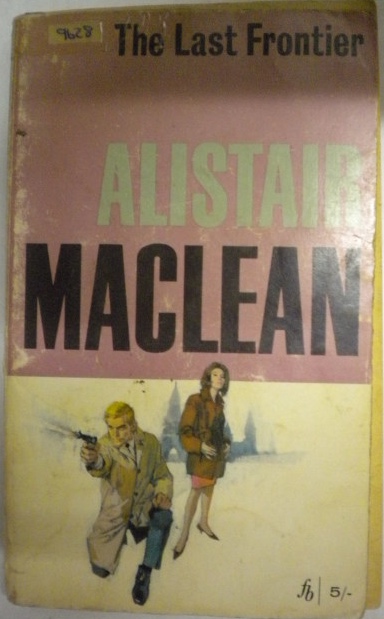
Alistair MacLean’s The Last Frontier
The Last Frontier is an early Alistair MacLean thriller, dating from 1959. It was filmed in 1961 as The Secret Ways and has also been published under that title. In my view MacLean was at his peak in the 60s and early 70s and his best books were those written in the first person. First-person narration suited MacLean’s purposes perfectly and allowed him to indulge in some of his favourite narrative tricks. The Last Frontier is written in the third person and it’s MacLean starting to really find his feet as a thriller writer. He hasn’t yet perfected his technique but he’s getting there.
There are also a couple of interesting aspects to this novel which I’ll get to later.
You know you’re in MacLean country from the first page - the hero is surrounded by a vast expanse of snow and ice and MacLean makes sure the reader feels the cold as well. It’s not the last time in the book that you’ll feel the cold seeping into your bones.
Michael Reynolds is a British spy and he’s behind the Iron Curtain and he’s cold and he’s being hunted. He’s spent months training for a very important mission and this is the first day and it’s all gone badly wrong. He expected the road-block just outside Budapest but he hadn’t expected the second road-block. Pretty soon he’s in the hands of the Hungarian secret police, the dreaded AVO. There’s no escape.
Then the first plot twist kicks in.
Reynolds’ job is to bring a British scientist back from Budapest. The scientist has no desire to return to the West but the British secret service will use whatever means necessary to persuade him to come. They’re hoping that lies, deception and emotional manipulation will work but it’s clear they’re prepared to resort to more drastic measures.
This is one of the interesting aspects I alluded to earlier. In this novel the British are the good guys but they’re as ruthless, dishonest and cynical as the communists. The novel even floats the suggestion that it was the West that was responsible for the Cold War in the first place. These thoughts are expressed by the courageous Hungarian freedom fighter Jansci who is in fact the most noble and sympathetic character in the book. Jansci takes an instant dislike to Michael Reynolds. Reynolds is everything he despises - a man without honour, without scruples, without emotions. A man of blood. And Reynolds is the novel’s hero. We’re getting close to John le Carre-Len Deighton levels of cynicism and darkness here.
There’s also some political messaging but it’s not at all what you expect in a Cold War spy thriller. It’s all about the futility of war and violence and the desirability of peace, non-violence and peaceful co-existence between the West and the communist world. Very unexpected for 1959, and any kind of messaging comes as a surprise in an Alistair MacLean novel. Usually I detest this kind of messaging but I can’t say it bothered me in this book.
Jansci and the Count, both key characters, offer a perspective on the Cold War that is radically at odds with the view that is offered in just about every other spy novel of the late 50s. It’s a perspective with which the novel’s hero, Reynolds, is increasingly in sympathy. And my impression is that MacLean had some sympathy for this radical re-appraisal of Cold War politics as well since it does constitute the major theme of the novel. In many ways The Last Frontier has a much stronger affinity with Graham Greene’s The Quiet American than with mainstream late 50s spy fiction and it can be seen as an anticipation of the moral murkiness of le Carre and Deighton. But the cynicism abut the Cold War in The Last Frontier goes way beyond anything in le Carre.
What we do expect in a MacLean are devious plot twists, relentless action and suspense and this novel delivers on all these counts. The plot is excellent. Reynolds makes mistake, all the heroic characters in the book make mistakes and all the villains make mistakes as well. Every time Reynolds thinks that this time he’s got it figured out and he’s not going to make another error everything goes horribly wrong again. He seems to keep running into brick walls but he’s been trained never to give up so he just picks himself up and has another try.
There’s a fair amount of violence and there are extended torture scenes but again MacLean surprises us. These are non-violent tortures by means of drugs intended not just to break down the victim’s resistance but to leave him nothing more than an empty shell. There’s no need to kill him afterwards because his personality will have been entirely destroyed. It’s much more horrifying than the conventional torture scenes that the average thriller writer would rely on.
Yet another surprise is the real emotional depth of the hero. We’re talking major character development here. By the end of the book the Michael Reynolds to whom we are introduced at the beginning has ceased to exist, not because his personality has been destroyed by torture but because all his prejudices and illusions and cherished beliefs have been exposed as wrong-headed and devoid of meaning. When a man has to abandon all the codes and values by which he has lived he really has to re-assemble his personality from scratch and that’s the challenge that Michael Reynolds faces.
MacLean did at times offer us damaged or flawed heroes (Fear Is the Key being an example) so perhaps we shouldn’t be so surprised by the complexity of the hero of The Last Frontier.
There are still the usual spy fiction themes of loyalty and betrayal, but they’re handled in a complex way.
MacLean’s plots were so good and he was such a master of action and suspense that it’s easy to overlook the fact that he could write some pretty gritty hard-edged prose when he had a mind to.
The Last Frontier is a slightly unconventional but very effective and very entertaining spy thriller. It has a slightly different feel compared to the novels he would write in the 1960s but it’s still highly recommended. In fact it’s thematically interesting enough to qualify for a very highly recommended rating.
There are also a couple of interesting aspects to this novel which I’ll get to later.
You know you’re in MacLean country from the first page - the hero is surrounded by a vast expanse of snow and ice and MacLean makes sure the reader feels the cold as well. It’s not the last time in the book that you’ll feel the cold seeping into your bones.
Michael Reynolds is a British spy and he’s behind the Iron Curtain and he’s cold and he’s being hunted. He’s spent months training for a very important mission and this is the first day and it’s all gone badly wrong. He expected the road-block just outside Budapest but he hadn’t expected the second road-block. Pretty soon he’s in the hands of the Hungarian secret police, the dreaded AVO. There’s no escape.
Then the first plot twist kicks in.
Reynolds’ job is to bring a British scientist back from Budapest. The scientist has no desire to return to the West but the British secret service will use whatever means necessary to persuade him to come. They’re hoping that lies, deception and emotional manipulation will work but it’s clear they’re prepared to resort to more drastic measures.
This is one of the interesting aspects I alluded to earlier. In this novel the British are the good guys but they’re as ruthless, dishonest and cynical as the communists. The novel even floats the suggestion that it was the West that was responsible for the Cold War in the first place. These thoughts are expressed by the courageous Hungarian freedom fighter Jansci who is in fact the most noble and sympathetic character in the book. Jansci takes an instant dislike to Michael Reynolds. Reynolds is everything he despises - a man without honour, without scruples, without emotions. A man of blood. And Reynolds is the novel’s hero. We’re getting close to John le Carre-Len Deighton levels of cynicism and darkness here.
There’s also some political messaging but it’s not at all what you expect in a Cold War spy thriller. It’s all about the futility of war and violence and the desirability of peace, non-violence and peaceful co-existence between the West and the communist world. Very unexpected for 1959, and any kind of messaging comes as a surprise in an Alistair MacLean novel. Usually I detest this kind of messaging but I can’t say it bothered me in this book.
Jansci and the Count, both key characters, offer a perspective on the Cold War that is radically at odds with the view that is offered in just about every other spy novel of the late 50s. It’s a perspective with which the novel’s hero, Reynolds, is increasingly in sympathy. And my impression is that MacLean had some sympathy for this radical re-appraisal of Cold War politics as well since it does constitute the major theme of the novel. In many ways The Last Frontier has a much stronger affinity with Graham Greene’s The Quiet American than with mainstream late 50s spy fiction and it can be seen as an anticipation of the moral murkiness of le Carre and Deighton. But the cynicism abut the Cold War in The Last Frontier goes way beyond anything in le Carre.
What we do expect in a MacLean are devious plot twists, relentless action and suspense and this novel delivers on all these counts. The plot is excellent. Reynolds makes mistake, all the heroic characters in the book make mistakes and all the villains make mistakes as well. Every time Reynolds thinks that this time he’s got it figured out and he’s not going to make another error everything goes horribly wrong again. He seems to keep running into brick walls but he’s been trained never to give up so he just picks himself up and has another try.
There’s a fair amount of violence and there are extended torture scenes but again MacLean surprises us. These are non-violent tortures by means of drugs intended not just to break down the victim’s resistance but to leave him nothing more than an empty shell. There’s no need to kill him afterwards because his personality will have been entirely destroyed. It’s much more horrifying than the conventional torture scenes that the average thriller writer would rely on.
Yet another surprise is the real emotional depth of the hero. We’re talking major character development here. By the end of the book the Michael Reynolds to whom we are introduced at the beginning has ceased to exist, not because his personality has been destroyed by torture but because all his prejudices and illusions and cherished beliefs have been exposed as wrong-headed and devoid of meaning. When a man has to abandon all the codes and values by which he has lived he really has to re-assemble his personality from scratch and that’s the challenge that Michael Reynolds faces.
MacLean did at times offer us damaged or flawed heroes (Fear Is the Key being an example) so perhaps we shouldn’t be so surprised by the complexity of the hero of The Last Frontier.
There are still the usual spy fiction themes of loyalty and betrayal, but they’re handled in a complex way.
MacLean’s plots were so good and he was such a master of action and suspense that it’s easy to overlook the fact that he could write some pretty gritty hard-edged prose when he had a mind to.
The Last Frontier is a slightly unconventional but very effective and very entertaining spy thriller. It has a slightly different feel compared to the novels he would write in the 1960s but it’s still highly recommended. In fact it’s thematically interesting enough to qualify for a very highly recommended rating.
I've reviewed the movie version, The Secret Ways (1961), on Classic Movie Ramblings.
Wednesday, August 18, 2021
Philip Loraine's Day of the Arrow
Day of the Arrow by Philip Loraine was the 1964 source novel for the superb and unfairly neglected low-key British horror movie Eye of the Devil (1966).
Robin Estridge (1920-2002) was a British author of suspense novels who wrote under a couple of pseudonyms, including Philip Loraine. He’s one of those many writers who enjoyed some success only to then disappear into almost complete obscurity.
There are some differences between novel and film but the core of the story remains the same.
The novel is told mostly through the eyes of young Scottish painter James Lindsay. It begins when he sees Françoise, the Marquise de Montfaulcon, leaving a Paris hotel with her lover. This surprises him a good deal. Françoise had been so much in love with her husband Philippe and she’s just not the sort of woman to take a lover. Lindsay and Françoise have a bit of a history. Lindsay had hoped to marry her before she chose Philippe. Lindsay is even more surprised when Françoise telephones him. She needs his help. Her husband has told her he is going to die.
Philippe had suffered a slight injury a short while before and Françoise had persuaded the doctor to give him a very thorough checkup. There is absolutely nothing wrong with him physically. But Françoise believes him when he tells her he is about to die.
Lindsay joins Françoise at Bellac, the Montfaulcon estate. He discovers something, mostly just tantalising hints, of the family’s history. They have been lords of Bellac for thirteen centuries. And a truly astonishing number of male heads of the family have met violent deaths in mysterious circumstances. The atmosphere at Bellac is unnaturally silent and a little grim. The vines have failed again.
There’s an odd collection of people there. There’s a young man named Christian. On his first day at Bellac Lindsay sees Christian shoot a dove with a bow and arrow. There’s Philippe’s young cousin Odile, a strange girl reputed to be a witch. But this is the 1960s. There are no witches in the 1960s. That magic trick she performed was clearly just an illusion. What else could it be?
The atmosphere at the chateau is subtly disturbing. Even Philippe prays a lot, which he never did before. Lindsay always assumed that Philippe was a non-believer.
Nobody seems to want to notice that something is strange here. Lindsay’s attempts to find answers almost cost him his life. Lindsay has the evidence he needs to explain the mystery but he can’t put the pieces together, or rather he just cannot except the true explanation.
Philippe and Françoise are much younger in the novel, compared to the movie, and there’s more emphasis on the unhealthiness of their sexual relationship.
In the movie Christian and Odile are brother and sister, which I think adds an interesting extra layer. And they’re much more disturbing in the movie. What’s interesting is that the movie downplays the sexual problem in the marriage between Philippe and Françoise but adds an interesting sexual subtext involving Christian and Odile.
The movie is definitely better than the book - its visual style conveys the atmosphere of subtle menace and strangeness far more effectively than Loraine’s prose. In both book and movie the hints of the supernatural are very subtle and very ambiguous (and I’m certainly not going to tell you if there really is anything supernatural) but they’re also handled more effectively in the movie.
The basic story is the same and it’s a pretty good story. There’s a bit more mystery in the book than the movie, but a bit less suspense. It’s a bit hard for me to judge the novel because having seen the movie I knew the nature of the secret of Bellac so the shock revelation was blunted a little for me.
This is a slow-burning story with the sense of menace being rather subtle.
Overall, not as good as the movie but still an interesting occult thriller. Recommended.
Robin Estridge (1920-2002) was a British author of suspense novels who wrote under a couple of pseudonyms, including Philip Loraine. He’s one of those many writers who enjoyed some success only to then disappear into almost complete obscurity.
There are some differences between novel and film but the core of the story remains the same.
The novel is told mostly through the eyes of young Scottish painter James Lindsay. It begins when he sees Françoise, the Marquise de Montfaulcon, leaving a Paris hotel with her lover. This surprises him a good deal. Françoise had been so much in love with her husband Philippe and she’s just not the sort of woman to take a lover. Lindsay and Françoise have a bit of a history. Lindsay had hoped to marry her before she chose Philippe. Lindsay is even more surprised when Françoise telephones him. She needs his help. Her husband has told her he is going to die.
Philippe had suffered a slight injury a short while before and Françoise had persuaded the doctor to give him a very thorough checkup. There is absolutely nothing wrong with him physically. But Françoise believes him when he tells her he is about to die.
Lindsay joins Françoise at Bellac, the Montfaulcon estate. He discovers something, mostly just tantalising hints, of the family’s history. They have been lords of Bellac for thirteen centuries. And a truly astonishing number of male heads of the family have met violent deaths in mysterious circumstances. The atmosphere at Bellac is unnaturally silent and a little grim. The vines have failed again.
There’s an odd collection of people there. There’s a young man named Christian. On his first day at Bellac Lindsay sees Christian shoot a dove with a bow and arrow. There’s Philippe’s young cousin Odile, a strange girl reputed to be a witch. But this is the 1960s. There are no witches in the 1960s. That magic trick she performed was clearly just an illusion. What else could it be?
The atmosphere at the chateau is subtly disturbing. Even Philippe prays a lot, which he never did before. Lindsay always assumed that Philippe was a non-believer.
Nobody seems to want to notice that something is strange here. Lindsay’s attempts to find answers almost cost him his life. Lindsay has the evidence he needs to explain the mystery but he can’t put the pieces together, or rather he just cannot except the true explanation.
Philippe and Françoise are much younger in the novel, compared to the movie, and there’s more emphasis on the unhealthiness of their sexual relationship.
In the movie Christian and Odile are brother and sister, which I think adds an interesting extra layer. And they’re much more disturbing in the movie. What’s interesting is that the movie downplays the sexual problem in the marriage between Philippe and Françoise but adds an interesting sexual subtext involving Christian and Odile.
The movie is definitely better than the book - its visual style conveys the atmosphere of subtle menace and strangeness far more effectively than Loraine’s prose. In both book and movie the hints of the supernatural are very subtle and very ambiguous (and I’m certainly not going to tell you if there really is anything supernatural) but they’re also handled more effectively in the movie.
The basic story is the same and it’s a pretty good story. There’s a bit more mystery in the book than the movie, but a bit less suspense. It’s a bit hard for me to judge the novel because having seen the movie I knew the nature of the secret of Bellac so the shock revelation was blunted a little for me.
This is a slow-burning story with the sense of menace being rather subtle.
Overall, not as good as the movie but still an interesting occult thriller. Recommended.
Wednesday, May 19, 2021
Evelyn Piper’s Bunny Lake Is Missing
Evelyn Piper’s Bunny Lake Is Missing was published in 1957. It’s a suspense novel with some domestic and psychological melodrama thrown in.
Evelyn Piper was a pseudonym used by American writer Merriam Modell (1908-1994).
Blanche Lake has only been in New York for three weeks. She previously lived in Providence but she had certain personal reasons for relocating to the Big Apple.
Blanche goes to pick up her three-year-old daughter Bunny from the nursery school in New York in which she has just enrolled her. But Bunny isn’t there. A search is made. The police are called. Maybe Blanche’s mother picked the child up? But no, that can’t be the case, her mother is out of town.
Naturally Blanche is pretty upset and she’s eventually persuaded to see a doctor. She obviously needs a sedative to calm her down. Dr Newsome is very concerned. Dr Newsome is a psychiatrist.
Blanche becomes even more upset when she becomes convinced that the police are not actually looking for her daughter.
While Blanche is looking for Bunny Mrs Negrito is looking for her son Eddie. Eddie is a bit troublesome and Mrs Negrito thinks he’s a bit too interested in Blanche Lake.
The problem for Blanche is that both the police and Dr Newsome believe that there are a lot of things in her story which just don’t add up. And she can’t present any real evidence to support her version of events. They don’t know whether to believe some of her story, or all of it. Or none of it. The reader doesn’t know either. Mostly we’re seeing things from Blanche’s point of view, but we don’t know if we can trust her point of view. We don’t even know if Blanche can trust her own point of view. Maybe she’s not entirely stable. She might not even be entirely sane. On the other hand she might be telling the truth about everything.
There’s a lot of pop psychology and social commentary to wade through. Whether that’s a good thing or a bad thing depends on your personal preferences. For me it’s a bad thing. I have a limited tolerance for that sort of thing, and an especially limited tolerance for pop Freudianism. Fortunately though there is definitely a suspense story here, and a mystery, and the author is fairly successful in keeping us unsure about what exactly is going on. So this is a psychological/emotional suspense thriller.
It’s also very much a woman’s story in the sense that it’s Blanche’s emotional responses as a woman that drive most of the plot, and social attitudes towards woman also play a part given that Bunny is illegitimate. Blanche’s relationship with her own mother is also important.
The ending is reasonably suspenseful as Blanche decides to bring things to a head one way or another, possibly in a rather desperate way. There’s also one nice touch right at the end - it’s not exactly a plot twist but I can’t say any more without revealing a spoiler.
Blanche is a sympathetic protagonist with more than a touch of ambiguity. There’s quite a lot of ambiguity to most of the other key characters as well - Louise Benton (the director of the nursery school), Dr Newsome and Wilson, a writer to whom Blanche turns for help. In true noir style we come to question the motivations of all the characters.
The plot has some very important parallels to a certain very famous mystery story (a story that is directly referenced in the later stages of the book) but to say any more would be to risk spoilers.
Otto Preminger’s film version, released in 1965, is in my opinion more successful than the novel but the novel certainly has its strengths. The novel mostly falls into the suspense thriller genre but there are some noir fiction elements as well in addition to the domestic melodrama elements I’ve already alluded to.
Bunny Lake Is Missing is perhaps not quite my cup of tea but if you don’t mind some social commentary and some psychological angst you’ll probably enjoy it more than I did. Which is not to say that I disliked the book. I just didn’t love it. Recommended, with a few caveats.
Evelyn Piper was a pseudonym used by American writer Merriam Modell (1908-1994).
Blanche Lake has only been in New York for three weeks. She previously lived in Providence but she had certain personal reasons for relocating to the Big Apple.
Blanche goes to pick up her three-year-old daughter Bunny from the nursery school in New York in which she has just enrolled her. But Bunny isn’t there. A search is made. The police are called. Maybe Blanche’s mother picked the child up? But no, that can’t be the case, her mother is out of town.
Naturally Blanche is pretty upset and she’s eventually persuaded to see a doctor. She obviously needs a sedative to calm her down. Dr Newsome is very concerned. Dr Newsome is a psychiatrist.
Blanche becomes even more upset when she becomes convinced that the police are not actually looking for her daughter.
While Blanche is looking for Bunny Mrs Negrito is looking for her son Eddie. Eddie is a bit troublesome and Mrs Negrito thinks he’s a bit too interested in Blanche Lake.
The problem for Blanche is that both the police and Dr Newsome believe that there are a lot of things in her story which just don’t add up. And she can’t present any real evidence to support her version of events. They don’t know whether to believe some of her story, or all of it. Or none of it. The reader doesn’t know either. Mostly we’re seeing things from Blanche’s point of view, but we don’t know if we can trust her point of view. We don’t even know if Blanche can trust her own point of view. Maybe she’s not entirely stable. She might not even be entirely sane. On the other hand she might be telling the truth about everything.
There’s a lot of pop psychology and social commentary to wade through. Whether that’s a good thing or a bad thing depends on your personal preferences. For me it’s a bad thing. I have a limited tolerance for that sort of thing, and an especially limited tolerance for pop Freudianism. Fortunately though there is definitely a suspense story here, and a mystery, and the author is fairly successful in keeping us unsure about what exactly is going on. So this is a psychological/emotional suspense thriller.
It’s also very much a woman’s story in the sense that it’s Blanche’s emotional responses as a woman that drive most of the plot, and social attitudes towards woman also play a part given that Bunny is illegitimate. Blanche’s relationship with her own mother is also important.
The ending is reasonably suspenseful as Blanche decides to bring things to a head one way or another, possibly in a rather desperate way. There’s also one nice touch right at the end - it’s not exactly a plot twist but I can’t say any more without revealing a spoiler.
Blanche is a sympathetic protagonist with more than a touch of ambiguity. There’s quite a lot of ambiguity to most of the other key characters as well - Louise Benton (the director of the nursery school), Dr Newsome and Wilson, a writer to whom Blanche turns for help. In true noir style we come to question the motivations of all the characters.
The plot has some very important parallels to a certain very famous mystery story (a story that is directly referenced in the later stages of the book) but to say any more would be to risk spoilers.
Otto Preminger’s film version, released in 1965, is in my opinion more successful than the novel but the novel certainly has its strengths. The novel mostly falls into the suspense thriller genre but there are some noir fiction elements as well in addition to the domestic melodrama elements I’ve already alluded to.
Bunny Lake Is Missing is perhaps not quite my cup of tea but if you don’t mind some social commentary and some psychological angst you’ll probably enjoy it more than I did. Which is not to say that I disliked the book. I just didn’t love it. Recommended, with a few caveats.
Subscribe to:
Posts (Atom)